Table of Contents
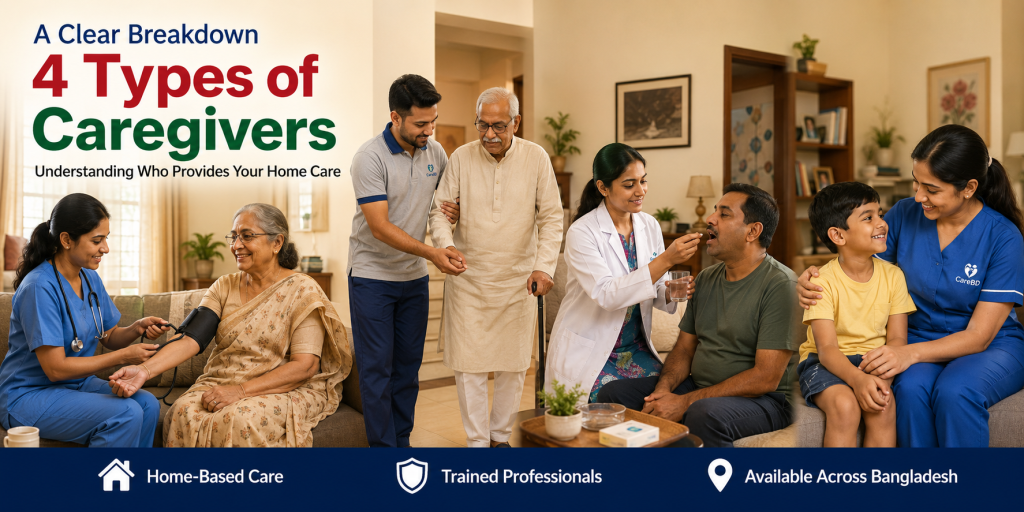
ToggleWhat are the 4 types of caregivers? The four main types are family caregivers, professional caregivers, informal caregivers and respite caregivers. Each one supports a person who needs help with daily life, health needs, emotional care or recovery. However, they are not the same. Some caregivers are unpaid family members, some are trained care workers, some are friends or neighbors, and others provide short-term relief when the main caregiver needs rest.
A clear caregiver definition in healthcare is simple: a caregiver is a person who helps someone who cannot fully care for themselves. The National Cancer Institute defines a caregiver as someone who gives care to people who need help taking care of themselves, including elderly people, people with chronic illness and people with disabilities. Caregivers may be family members, friends, health professionals or social workers, and care can happen at home, in hospital or in another healthcare setting.
In daily life, caregiving may include bathing, dressing, feeding, medicine reminders, transportation, emotional support, safety monitoring and communication with doctors. The CDC describes caregiving as support for another person’s social or health needs, including help with daily activities such as bathing, dressing, shopping, transport and household tasks.
This guide explains each type clearly, compares their duties and helps families understand which caregiver may be right for elderly care, home care or short-term support.
The four types of caregivers are:
| Caregiver Type | Simple Meaning | Usually Paid? | Best For |
|---|---|---|---|
| Family caregiver | A spouse, child, parent or relative who provides care | Usually no | Daily family support |
| Professional caregiver | A trained care worker, home health aide, CNA or nursing assistant | Yes | Skilled home care and structured support |
| Informal caregiver | A friend, neighbor or community member helping without formal arrangement | Usually no | Practical help and companionship |
| Respite caregiver | A short-term caregiver who gives the main caregiver a break | Often yes | Relief, rest and temporary backup |
The right caregiver depends on the patient’s condition, daily routine, mobility, memory, safety needs and family availability. For elderly care, families often combine more than one type. For example, an adult child may be the family caregiver, while a professional caregiver visits daily and a respite caregiver helps on weekends.
A caregiver is not only someone who “stays with” a patient. Good caregiving includes observation, patience, personal assistance, communication and safety awareness.
The phrase caregiver definition in healthcare usually means a person who supports someone with health-related or daily living needs. This may include older adults, people recovering from surgery, stroke patients, disabled people, dementia patients or people with chronic illness.
Healthcare caregiving may happen in many places:
Home
Hospital
Clinic
Rehabilitation center
Elderly care facility
Senior day care center
The caregiver may not always perform medical tasks. In many cases, their role is to support daily life and report important changes to family members or healthcare professionals.
The phrase caregiver definition in nursing has a slightly more clinical meaning. In nursing, caregiving often focuses on personal care, comfort, safety, hygiene, mobility and patient observation. Nursing assistants, for example, may help patients bathe, use the toilet, dress, transfer between bed and wheelchair, eat meals and report health concerns to nurses.
A caregiver is not always a nurse. A nurse provides licensed clinical care. A caregiver supports daily care needs. In some home care situations, both may be needed.
People often search what is a caregiver duties when they want to know what a caregiver actually does. The duties depend on the type of caregiver, but common responsibilities include:
Helping with bathing, grooming and dressing
Preparing meals and supporting feeding
Reminding the person to take medicine as advised
Assisting with walking, sitting and safe movement
Keeping the home or care area clean and safe
Offering companionship and emotional support
Arranging transport or doctor visits
Watching for changes in mood, appetite or physical condition
Updating family members about daily care
Supporting rest, routine and dignity
Caregiving should always respect the person’s privacy, culture, comfort and independence.
A family caregiver is a relative who provides care to a loved one. This may be a spouse caring for a partner, an adult child supporting elderly parents, a parent caring for a disabled child or a sibling helping another sibling.
Family caregiving is common because care often begins at home. A person may start by helping with small tasks, then gradually take on more responsibility as the loved one becomes older, weaker or more dependent.
A family caregiver is usually unpaid. Their relationship is personal, emotional and long-term. They know the patient’s habits, food preferences, fears, medical history and family background.
This personal knowledge can make family care very comforting. An elderly mother may feel safer with her daughter. A father recovering from illness may trust his son more than a stranger. A spouse may understand small changes in behavior before anyone else notices.
Family caregiver duties often include both physical and emotional work. A family caregiver may help with bathing, changing clothes, preparing meals, giving reminders, arranging doctor appointments, managing prescriptions, buying groceries and staying near the patient at night.
Emotional support is also a major part of the role. Many elderly people feel anxious, lonely or dependent. A family caregiver offers reassurance because the relationship is built on trust.
For elderly care, a family caregiver often becomes the main decision-maker. They may coordinate with doctors, hire professional caregivers, arrange senior day care, manage home nursing and communicate with relatives.
This role can become heavy over time. Elderly people may need help with mobility, memory, toileting, feeding, medicine and sleep routines. When one family member handles everything alone, stress can build quickly.
Family caregivers are at risk of caregiver burnout when they provide care for long hours without enough rest. Cleveland Clinic describes caregiver burnout as physical, emotional and mental exhaustion that can happen while caring for another person. It may involve fatigue, anxiety and depression, and support options can include respite care, support groups or mental health guidance.
This is why a family caregiver should not feel guilty about asking for help. Support from professional caregivers, informal helpers or respite caregivers can protect both the caregiver and the elderly person.
Internal link suggestion: Add a link here to your future article: Caregiver Burnout: Signs, Causes and How Families Can Prevent It.
A professional caregiver is a trained person who provides care as a paid service. This may include a home health aide, certified nursing assistant, nursing assistant, personal care aide or trained elderly care worker.
Professional caregivers are useful when the patient needs regular support, mobility help, structured routine or care that family members cannot safely provide alone.
Professional caregivers provide service based on training, experience and a care plan. They may work in homes, hospitals, senior care centers, assisted living settings or rehabilitation environments.
Families often choose professional care when the elderly person needs help every day, when family members work full-time or when the patient has specific care needs such as weakness, fall risk, dementia, stroke recovery or post-hospital support.
A home health aide may help with bathing, dressing, light housekeeping, meal preparation, transport and social engagement. The U.S. Bureau of Labor Statistics describes home health and personal care aides as workers who assist with daily personal tasks, household tasks, appointments, transportation, groceries, meals and social connection.
A CNA, or certified nursing assistant, may support patients with hygiene, toileting, feeding, movement and basic observation under nursing supervision depending on the healthcare setting. Nursing assistant responsibilities can include bathing, toileting, dressing, repositioning, transferring, recording concerns and helping patients eat.
In Bangladesh, job titles may vary by provider. Families should ask about training, experience, background checks, supervision and emergency response before hiring anyone.
Professional caregiver duties may include:
Personal hygiene support
Mobility assistance
Feeding and meal support
Medication reminders
Basic health observation
Companionship
Fall prevention
Bedridden patient support
Elderly care routine management
Family updates
Support during doctor visits
A professional caregiver should follow a care plan. They should not make medical decisions unless they are licensed and authorized to do so.
Professional care is helpful when the patient needs consistent attention or when family caregivers feel overwhelmed. It may also be the safer option when the elderly person has limited mobility, confusion, risk of falling, chronic illness or post-surgery weakness.
A trained caregiver can reduce daily stress for families. More importantly, proper support can help the patient maintain dignity and comfort at home.
An informal caregiver is usually a friend, neighbor, community member or close family friend who helps without a formal paid arrangement. This type of caregiver may not be trained, but they can provide meaningful support in daily life.
Informal care is common in communities where people help each other naturally. A neighbor may check on an elderly person every morning. A family friend may take someone to the doctor. A local community member may help buy medicine or groceries.
An informal caregiver provides unpaid or loosely arranged support. The relationship is personal, but the person is not always a direct family member.
The National Cancer Institute notes that an informal caregiver is often a family member or friend who gives care to someone they have a personal relationship with, usually without payment.
Family caregivers and informal caregivers can overlap, but they are not always the same.
A family caregiver is related to the person by blood, marriage or family role. An informal caregiver may be a friend, neighbor, colleague or trusted community member. Family caregivers usually carry deeper responsibility. Informal caregivers often provide lighter, flexible or occasional help.
For example, an adult daughter managing her father’s daily care is a family caregiver. A neighbor who checks whether he has eaten lunch is an informal caregiver.
Informal caregiver duties may include:
Checking on the person regularly
Buying groceries or medicine
Offering companionship
Helping with transport
Calling family members when needed
Assisting with small household tasks
Supporting religious or social activities
Noticing visible changes in health or mood
Informal caregivers can be very helpful, but they should not be expected to replace trained care when medical, mobility or personal care needs are serious.
The biggest strength of informal care is trust. The elderly person may feel comfortable because the helper is familiar. This support can also reduce loneliness.
The main limit is lack of training. A neighbor or friend may not know how to transfer a weak patient, manage dementia behavior, prevent falls or respond to medical emergencies. For higher-risk care, professional support is safer.
A respite caregiver provides temporary care so the main caregiver can rest, work, attend personal tasks, recover from stress or spend time with other family members.
This type is often missed in basic caregiver articles, but it is very important. Long-term caregiving can be exhausting, especially when one person handles everything every day.
A respite caregiver is a short-term replacement or backup caregiver. Respite care may last a few hours, a full day, overnight or longer depending on the family’s need.
The National Institute on Aging explains that respite care provides short-term relief for primary caregivers, giving them time to rest, travel or spend time with family and friends.
Many family caregivers avoid taking breaks because they feel responsible. Over time, this can damage their physical and mental health. A tired caregiver may become less patient, less focused and more likely to make mistakes.
Respite care protects the care system at home. It gives the main caregiver time to sleep, attend work, visit a doctor, manage household duties or simply breathe.
A respite caregiver may handle:
Short-term supervision
Meal support
Companionship
Toileting assistance
Mobility help
Medication reminders
Safety monitoring
Bedside support
Family updates
Emergency communication if needed
The duties should be agreed before the service starts. For example, one family may need only companionship for an elderly parent. Another may need help with feeding, walking and toileting.
Respite care is especially useful for elderly care. Older adults may need supervision throughout the day, while family caregivers may need time for work, study or rest.
A respite caregiver can also be helpful during family events, travel, caregiver illness or temporary emergencies. It is not a sign of neglect. It is a smart way to keep care sustainable.
| Type | Who They Are | Main Duties | Strength | Limitation |
|---|---|---|---|---|
| Family caregiver | Spouse, adult child, parent, sibling or relative | Daily care, emotional support, appointments, medicine reminders | Strong trust and personal knowledge | High burnout risk |
| Professional caregiver | Trained paid care worker, HHA, CNA or nursing assistant | Personal care, mobility support, hygiene, routine care, observation | Skill, structure and reliability | Cost and provider quality vary |
| Informal caregiver | Friend, neighbor or community helper | Check-ins, errands, companionship, transport | Familiar and flexible support | Usually not trained |
| Respite caregiver | Temporary relief caregiver | Short-term care while main caregiver rests | Prevents caregiver exhaustion | Temporary, not always continuous |
This comparison helps families choose care based on real needs instead of labels. A safe care plan may include more than one caregiver type.
The phrase types of caregivers for elderly is important because elderly care often requires a combination of physical, emotional and safety support.
Some older adults need only companionship. Others need help with bathing, toileting, walking, feeding, memory care or chronic illness management. The right caregiver depends on the level of need.
For regular daily support, a family caregiver or professional caregiver is usually the main choice. A family caregiver understands the person’s habits, while a professional caregiver can provide structured assistance.
Many families use both. The family member manages decisions, while the professional caregiver handles daily care tasks.
When an elderly person has stroke weakness, fall risk, dementia, Parkinson’s disease, post-surgery recovery or serious mobility problems, professional support is often safer.
A trained caregiver can help with transfers, walking, toileting and routine monitoring. For clinical care, families may also need a nurse or doctor depending on the condition.
When the main caregiver is tired, stressed or unavailable, a respite caregiver is the best fit. This support may prevent caregiver burnout and keep the home care routine stable.
Informal caregivers can also help with light duties, but respite care is better when the elderly person needs planned supervision.
Choosing a caregiver should not be rushed. Families should think about safety, dignity, trust and the level of care needed.
Start with the person’s actual needs. Does the elderly person walk independently? Can they eat alone? Do they forget medicine? Are they at risk of falling? Do they need toileting help? Is there confusion, aggression or wandering?
A simple assessment makes the decision easier.
A family caregiver may be enough for companionship and routine support. A professional caregiver may be needed for bathing, mobility and daily elderly care. An informal caregiver can help with errands and check-ins. A respite caregiver can give the main caregiver time to rest.
The caregiver type should match the duty. Do not ask an untrained person to do risky physical care.
Before hiring a caregiver, ask about experience, training, references, emergency handling and supervision. For professional services, families should also ask how the provider updates relatives and manages backup support if the assigned caregiver is absent.
Good care depends on communication. A caregiver should report changes in appetite, sleep, mood, mobility, pain, breathing, confusion or behavior.
What are the 4 types of caregivers? They are family caregivers, professional caregivers, informal caregivers and respite caregivers. Each type has a different role, and each can be valuable when used correctly.
Family caregivers bring love and trust. Professional caregivers bring training and structure. Informal caregivers add community support. Respite caregivers protect the main caregiver from exhaustion.
For elderly care, the best solution is often a balanced care plan. Families should choose support based on the person’s health, safety, emotional needs and daily routine.
Contact Health Asia for a personalized caregiver and elderly care plan that supports safety, comfort and dignity at home.
The 4 types of caregivers are family caregivers, professional caregivers, informal caregivers and respite caregivers. Each type provides different levels of support depending on the patient’s needs.
A family caregiver is a relative, such as a spouse, child, parent or sibling, who helps a loved one with daily care, emotional support, health appointments and routine needs.
A professional caregiver is a trained paid care worker. This may include a home health aide, CNA, nursing assistant or elderly care worker who supports personal care, mobility, hygiene and daily routines.
An informal caregiver is usually a friend, neighbor or community member who helps without a formal paid arrangement. They may assist with errands, companionship, transport or regular check-ins.
A respite caregiver provides temporary care so the main caregiver can rest, work, travel or recover from stress. Respite care is especially helpful for preventing caregiver burnout.
The caregiver definition in healthcare is a person who supports someone who needs help with daily living, health-related needs, emotional care or recovery. The caregiver may be a family member, friend or trained professional.
The caregiver definition in nursing usually refers to someone who supports patient comfort, hygiene, mobility, feeding, toileting and observation. Clinical nursing tasks should be handled by licensed professionals.
A caregiver duties list may include bathing, dressing, meal preparation, feeding support, medicine reminders, mobility help, companionship, safety monitoring, transport and family updates.
For elderly care, the best caregiver depends on the person’s condition. Family caregivers are good for emotional support, professional caregivers are better for structured daily care, and respite caregivers help when the main caregiver needs rest.
Yes. Many elderly people need a combination of support. A family member may manage care, a professional caregiver may provide daily assistance, an informal caregiver may help with errands and a respite caregiver may cover breaks.
Fill out the form below and our Care Advisors will get back to you with care information you need.