Table of Contents
ToggleMost common home care service is a phrase many families search when they are trying to understand what kind of help an elderly parent, recovering patient or disabled family member may need at home. In most cases, the answer starts with personal care.
Personal care means hands-on support with daily living tasks such as bathing, dressing, grooming, toileting, eating, walking and moving safely around the home. These tasks may look simple when a person is healthy. However, after illness, surgery, stroke, weakness or ageing, they can become difficult, unsafe or impossible without help.
In healthcare, many of these tasks are called activities of daily living, or ADLs. ADLs include essential personal care tasks such as eating, dressing, bathing, toileting, continence and transferring from one position to another. Difficulty with ADLs is often used to understand a person’s functional ability and care needs.
For families in Bangladesh, personal care is becoming more important because many elderly people want to stay at home, while family members may be busy with work, traffic, business or study. A trained caregiver can support daily routines while helping the person remain safe, clean, comfortable and respected.
Personal care in home care means non-medical help with daily body care, movement, hygiene and basic routine. It is usually provided by a caregiver, personal care aide, home health aide or trained attendant.
The main goal is not to replace independence. Good care helps the person do whatever they can safely do by themselves, while the caregiver supports the tasks that are difficult or risky.
A clear personal care definition is: support with basic daily activities that help a person stay clean, dressed, fed, mobile and safe.
These activities are closely connected to ADLs. For example, if an elderly person cannot bathe safely, they may need bathing assistance. If a patient cannot stand alone after surgery, they may need mobility and transfer support. If someone has weakness or confusion, they may need help with dressing, toileting and eating.
Personal care is practical, but it is also emotional. Bathing, toileting and dressing are private tasks. A respectful caregiver protects dignity, speaks gently and avoids rushing the person.
Personal care and medical care are not the same.
Personal care supports daily living. Medical care treats or monitors health conditions through clinical tasks. A caregiver may help with bathing, dressing and meal support. A nurse may provide wound care, injections, clinical monitoring or other medical procedures depending on the patient’s condition.
Non-medical home care includes personal hygiene, companionship, grooming, toileting, walking support, meal help, light safety observation and family updates.
This type of support is useful when the person does not need hospital care but cannot manage daily life alone.
Custodial care usually means non-medical assistance with daily activities such as bathing, dressing, eating or using the toilet. It can be provided at home when the person needs routine support rather than skilled clinical treatment.
For elderly care, custodial care is often the foundation of home support.
Personal care is often treated as the most common home care service because it solves the first problem families notice: the person cannot safely complete daily tasks alone.
A patient may not need oxygen, injections or advanced nursing every day. However, they may still need help getting out of bed, bathing, dressing, eating, walking or using the toilet. That is why personal care becomes the starting point for many home care plans.
In Bangladesh, demand is likely to grow because the older population is increasing. The World Bank reports that one in every ten citizens in Bangladesh was expected to be 60 or older by 2025, and this could rise to one in five by 2050.
Personal care includes the daily tasks that keep a person clean, comfortable, nourished and safe. The exact service list depends on the patient’s condition, family preference and caregiver training.
Bathing assistance at home is one of the most important personal care services. A caregiver may help the person enter the bathroom, sit safely, wash properly, dry the body and wear fresh clothes.
Personal hygiene may also include brushing teeth, washing the face, cleaning hands, basic skin care and keeping the patient’s room clean.
This care must be handled with privacy. The caregiver should explain each step and allow the person to do any part they can manage.
Dressing assistance helps people who have weakness, arthritis, stroke effects, balance problems or pain. A caregiver may help choose comfortable clothes, manage buttons or zippers and support safe changing.
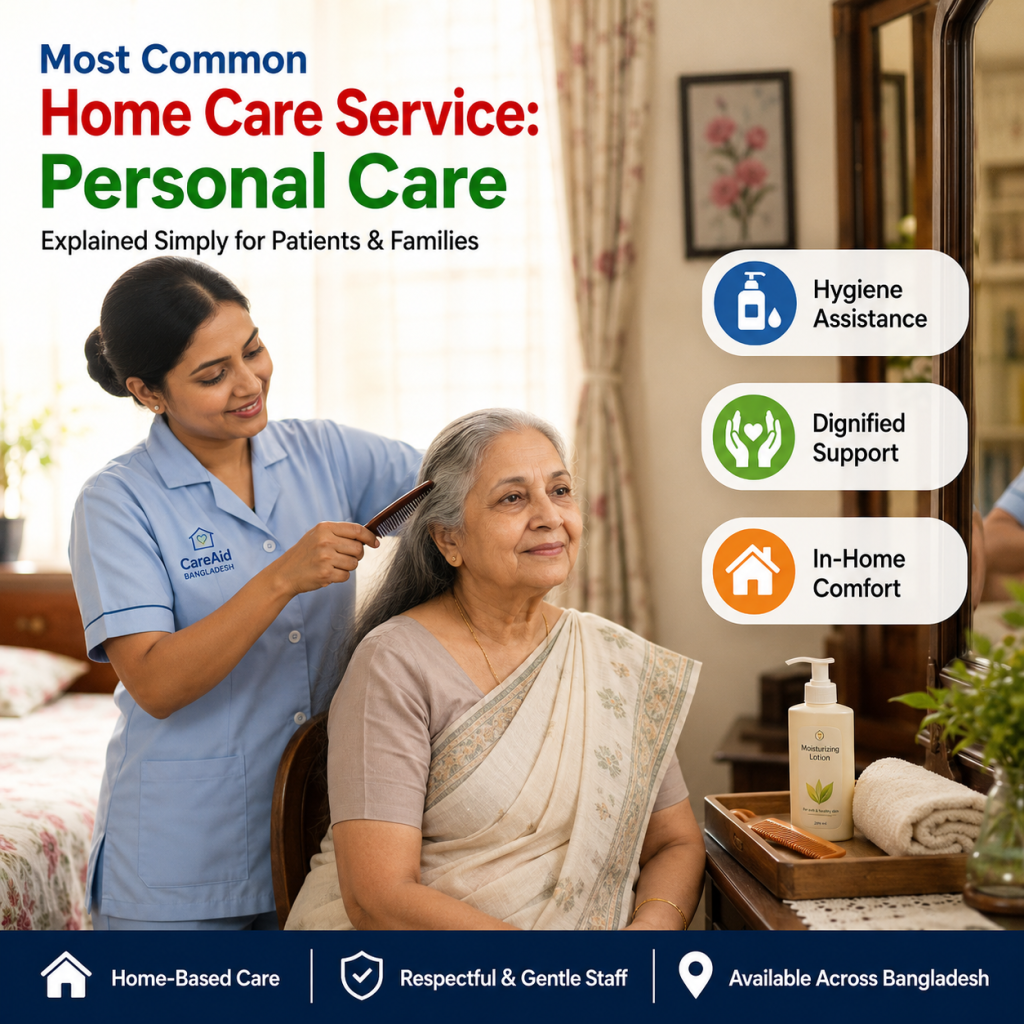
Grooming support may include combing hair, shaving support, nail care assistance and helping the person look neat. These tasks may seem small, but they can improve confidence and mood.
Toileting support at home should be respectful and calm. A caregiver may help the person walk to the toilet, sit safely, clean properly and change clothes when needed.
Continence care may include changing pads, cleaning skin, keeping bedding dry and preventing discomfort. Poor continence care can cause embarrassment, odor, skin irritation and infection risk, so families should choose a caregiver who handles this task professionally.
Mobility assistance for elderly people helps reduce fall risk. A caregiver may support walking, standing, sitting, turning in bed or moving from bed to chair.
Transfer support is especially important for stroke patients, post-surgery patients and bedridden people. Unsafe lifting can injure both the patient and the caregiver, so the family should explain the patient’s weight, strength and mobility level before service starts.
Fall prevention home care may also include clearing walkways, keeping floors dry, improving lighting and placing essential items within reach.
Meal prep home care may include preparing simple meals, serving food, encouraging water intake and helping the person eat.
For elderly people, nutrition support matters because appetite may decrease with age or illness. Some people forget meals, eat too little or need soft food. Families should share diet instructions, allergies and doctor-recommended restrictions with the caregiver.
A medication reminder service helps the person remember when medicine is due. However, caregivers should not change doses, stop medicine or give medical advice.
Light monitoring may include noticing changes in appetite, sleep, mood, movement, breathing, skin condition or behavior. A responsible caregiver should update the family if anything unusual appears.
Personal care is useful for anyone who struggles with daily living tasks. The need may be temporary after illness or long-term due to age, disability or chronic illness.
Elderly care at home often begins with personal care. An older person may need help bathing, dressing, walking, eating or using the toilet. Some seniors are mentally alert but physically weak. Others may have memory problems, confusion or fear of falling.
In Dhaka, families may search for elderly care Dhaka because they need help during office hours or full-time support for elderly parents. Personal care lets the elderly person stay in a familiar home environment while receiving daily assistance.
Post-surgery personal care may include bathing help, dressing support, safe walking, meal assistance and help getting in or out of bed.
After surgery, weakness and pain can make normal tasks difficult. A caregiver can reduce the risk of falls and help the patient follow a stable recovery routine.
For post-surgery care Dhaka searches, families should explain the patient’s condition clearly before booking. Some patients need only personal care, while others may need nursing support.
Disability care at home may include mobility support, hygiene assistance, meal help, toileting support and daily companionship.
People with chronic illness may also need a stable routine. For example, someone with diabetes, heart disease, stroke effects, Parkinson’s disease or breathing difficulty may need careful support throughout the day.
Personal care should focus on ability, not limitation. The caregiver should encourage independence where possible and assist only where help is needed.
Getting personal care home services in Bangladesh should start with a proper care assessment. A rushed decision can lead to poor caregiver matching, safety issues or family dissatisfaction.
A caregiver agency Dhaka service may provide trained caregivers, replacements, supervision and service coordination. This can be helpful when the patient needs full-time support or when the family cannot manage caregiver screening alone.
Before hiring, ask these questions:
Is the caregiver trained?
Is identity verified?
Is police verification available?
Can the agency provide a replacement?
Does the caregiver have experience with elderly or bedridden patients?
How will the family receive updates?
A police-verified caregiver is especially important when someone will spend long hours inside the home.
Part-time personal care may be enough when the person needs help for bathing, grooming, meals or daytime supervision.
Full-time care may be better when the patient needs support throughout the day. A 24-hour caregiver Dhaka service may be needed for bedridden patients, elderly people at fall risk or patients who need night-time assistance.
For the most common home care service the best choice depends on three things: the patient’s condition, family availability and safety risk.
Personal care cost in Bangladesh depends on care hours, patient condition, caregiver training, location, agency support and whether the care is part-time, full-time or 24-hour.
Local agency listings may show monthly caregiver ranges for full-time or live-in care, and specialized care may cost more when dementia, stroke recovery or complex mobility support is involved. One current local listing gives example monthly ranges for live-in and specialized caregiver support, but families should treat these as market examples rather than fixed rates because provider quality, location and patient needs can change the quotation.
For a service page, the safest wording is: “Contact us for a care assessment and custom quotation.” This avoids outdated pricing and keeps the page trustworthy.
Personal care is often the most common home care service because it supports the daily tasks people cannot safely manage alone. Bathing, dressing, toileting, grooming, meals, movement and medication reminders are basic needs, but they directly affect comfort, dignity and quality of life.
For elderly parents, post-surgery patients, disabled people and chronically ill family members, personal care can make home life safer and more manageable. The right caregiver should be trained, verified, respectful and matched to the patient’s real needs.
A strong care plan should include daily routines, hygiene needs, mobility level, meal instructions, medicine reminder times, emergency contacts and family update rules.
Contact Health Asia for safe, verified and personalized personal care home services in Bangladesh.
The most common home care service is often personal care because many patients first need help with daily activities such as bathing, dressing, grooming, toileting, eating and walking.
Personal care in home care means non-medical support with daily living tasks. It helps elderly people, disabled individuals and recovering patients stay clean, safe and comfortable at home.
Personal care may include bathing assistance, hygiene care, dressing, grooming, toileting support, continence care, mobility help, meal preparation, eating support and medication reminders.
No. Personal care focuses on daily living support. Home health care may include clinical services such as nursing, therapy, wound care or medical monitoring.
A caregiver is a general term for someone who provides care. A personal care aide is a caregiver who mainly helps with non-medical daily tasks such as bathing, dressing, meals and movement.
Yes. A family member can provide personal care as an unpaid caregiver. However, professional help may be needed if the patient requires heavy lifting, toileting support, night care or long-term daily assistance.
Elderly people, post-surgery patients, disabled individuals, bedridden patients and people with chronic illness may need personal care at home.
Many providers may offer part-time, full-time or 24-hour home care in Dhaka. Availability depends on caregiver schedule, patient condition and service area.
The cost depends on care hours, patient condition, caregiver experience, location, agency supervision and whether the service is part-time, full-time or live-in. A custom assessment gives the most accurate quotation.
Choose a provider that offers trained caregivers, identity verification, background checks, clear communication, replacement support and a written care plan based on the patient’s daily needs.
Fill out the form below and our Care Advisors will get back to you with care information you need.