Table of Contents
ToggleCaring for an elderly parent, a sick family member, or a patient recovering after hospital discharge is not easy. Families want love, safety, comfort, and proper attention at home. However, daily care can become difficult when family members have work, children, travel, or other responsibilities. This is where a professional home caregiver can make life easier.
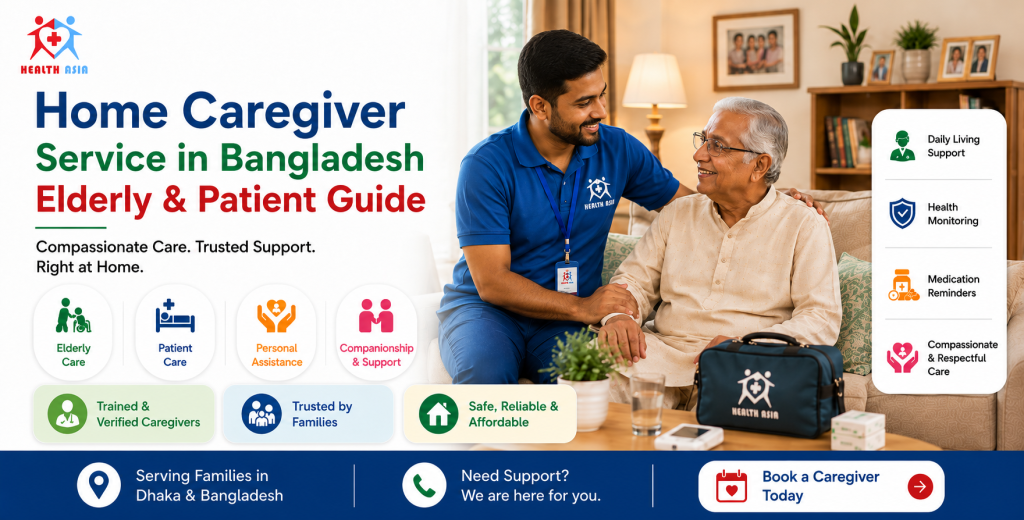
A home caregiver helps people who need daily support at home. The support may include elderly care, personal care, mobility help, feeding support, companionship, hygiene assistance, and general patient care at home. In Bangladesh, the demand for home caregiver service is growing because more families want safe care without sending their loved ones away from home.
This complete guide explains what a home caregiver does, who needs caregiver home service, how to choose a reliable provider, and what families should know before arranging in-home care.
A home caregiver is a trained or experienced care support person who helps elderly people, sick patients, disabled individuals, or recovering patients with daily living activities at home. Unlike a hospital nurse, a caregiver usually focuses on daily comfort, safety, hygiene, movement, food support, companionship, and routine assistance.
In simple words, a home caregiver supports the person when they cannot manage daily life alone.
This may sound simple, but the role is deeply important. For many families, a caregiver becomes the bridge between hospital care and family care. The patient stays at home, but they still receive regular attention, monitoring, and daily support.
A home caregiver helps with daily personal care, movement, feeding, hygiene, medicine reminders, companionship, and basic patient support at home. They do not replace doctors or medical treatment, but they make daily care safer and more organized.
In Bangladesh, many elderly people live with family. This is a beautiful part of our culture. However, modern life has changed family routines. Many adult children work full-time. Some live in another city or abroad. Others may be at home but do not have the skill or time to manage a bedridden patient or a frail elderly parent.
As a result, families often need professional home caregiver services for safe support.
A caregiver helps reduce stress for the family. More importantly, they help the patient feel cared for, respected, and less lonely.
Not every person needs a caregiver. Still, many families realize too late that their loved one has been struggling silently. A professional caregiver home service is useful when someone needs regular support for daily activities, safety, or recovery.
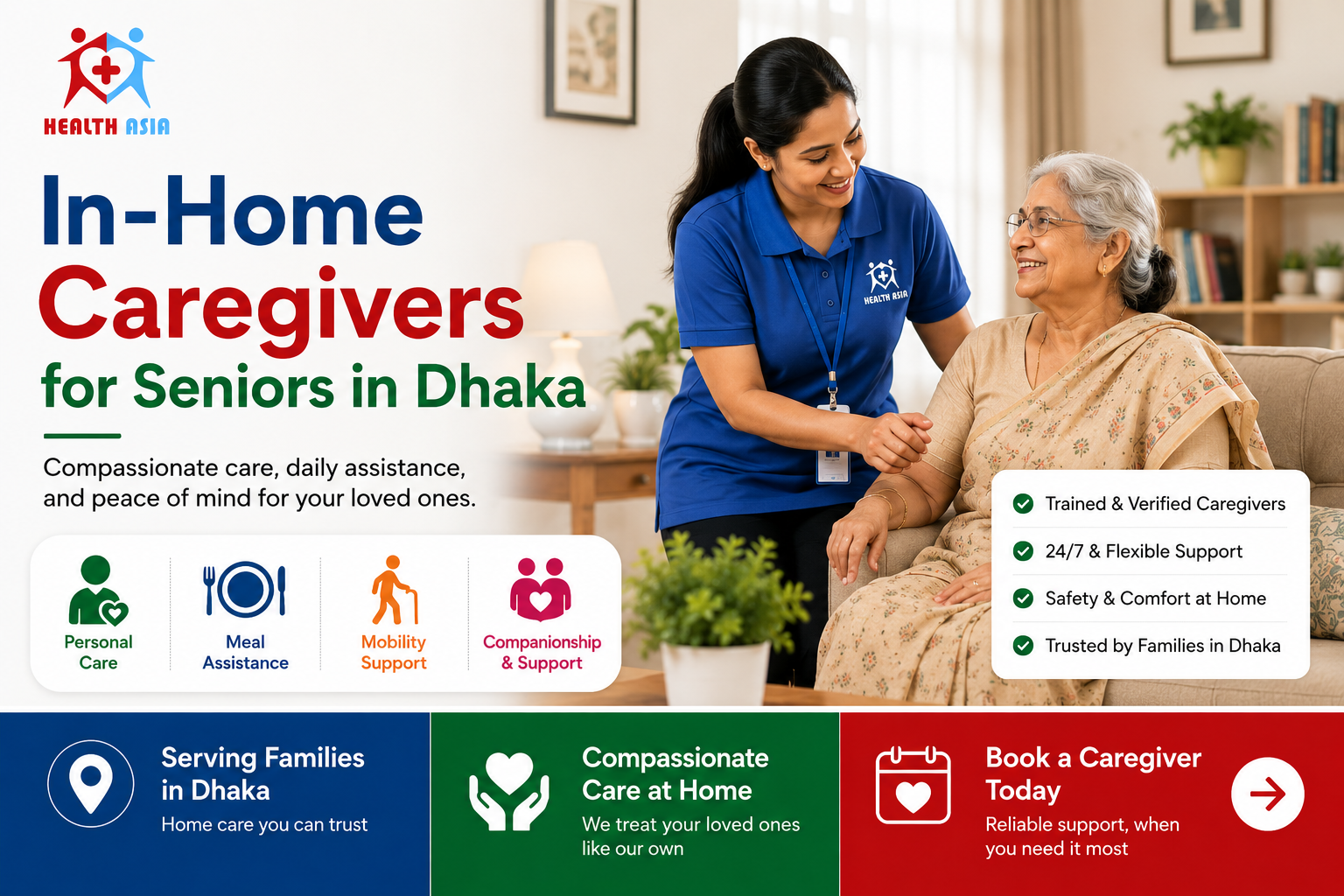
Elderly people often need help with walking, bathing, dressing, eating, toileting, and taking medicines on time. Some seniors can move independently, but they may still need supervision because of weakness, dizziness, forgetfulness, or fear of falling.
For this reason, a home caregiver for elderly people is very helpful. The caregiver can assist with daily routines while allowing the elderly person to stay in a familiar home environment.
After surgery, stroke, injury, infection, or long illness, many patients return home but still need care. Family members may not know how to support the patient safely. In this situation, a home caregiver can help with movement, food support, hygiene, rest routine, and basic observation.
However, medical treatment must always follow the doctor’s instructions. A caregiver supports daily care, but diagnosis, prescription, and clinical decisions should come from qualified healthcare professionals.
Bedridden patients need careful support. They may require help with changing position, cleanliness, feeding, basic comfort, and maintaining a safe bed environment. Without regular care, they may face discomfort, poor hygiene, skin problems, or emotional distress.
A trained caregiver can support the family by keeping the patient’s routine more organized.
Some people cannot move freely because of age, injury, disability, paralysis, or chronic illness. In-home caregivers can help them move safely from bed to chair, use the bathroom, eat meals, and maintain personal hygiene.
This type of help protects dignity. Instead of depending fully on busy family members, the person gets respectful support throughout the day.
Caregiving is emotional work. It is also physically tiring. Many family caregivers feel guilty when they cannot provide constant care. A professional home care caregiver can reduce that pressure.
With reliable support, family members can rest, work, and manage life while still keeping their loved one at home.
A home caregiver’s duties depend on the patient’s condition, family expectations, care hours, and service plan. Some people need only light help. Others need full-time or 24/7 support.
Personal care is one of the most important parts of home caregiver service. It includes help with bathing, dressing, grooming, oral care, toileting, and cleanliness. These tasks must be done respectfully because the patient may feel shy or uncomfortable.
A good caregiver protects privacy and dignity. They should not make the elderly person or patient feel helpless.
Many elderly people do not eat properly when alone. Some forget meals. Others cannot feed themselves due to weakness, shaking hands, or illness.
A caregiver can help by preparing simple meal routines, assisting during feeding, and reminding the patient to drink water. If the doctor gives a diet plan, the caregiver should follow the family’s instructions carefully.
Falls are a major concern for elderly people and weak patients. A caregiver can help them walk slowly, move from bed to chair, use walking aids, and avoid risky movement.
This is especially important for patients recovering after surgery or stroke. Safe movement can improve confidence and reduce fear.
A home caregiver may remind the patient to take medicines at the right time based on family or doctor instructions. However, the caregiver should not prescribe medicine or change dosage.
This distinction is important. A caregiver can support the routine, but medical decisions belong to qualified healthcare professionals.
Many elderly people suffer not only from illness but also from loneliness. A caregiver can talk with them, listen to them, help them stay engaged, and make them feel less isolated.
This emotional support matters. Sometimes a calm conversation can improve the person’s mood more than the family expects.
A caregiver can observe changes in appetite, sleep, mood, movement, weakness, or discomfort. They can then inform the family. Early communication helps families take action before a small issue becomes serious.
Still, observation is not diagnosis. If there is any serious concern, the family should contact a doctor or hospital.
Many families become confused between home caregiver, home health caregiver, nurse, and home care caregiver. The terms are related, but they are not always the same.
A home caregiver provides daily living support. This includes hygiene help, feeding support, walking assistance, companionship, routine care, and general safety supervision.
They are best for elderly people, weak patients, recovering patients, and people who need regular non-clinical support.
A home health caregiver may provide more health-focused support depending on training, service structure, and patient needs. In some cases, this can include basic health observation, support for care routines, or assistance under medical guidance.
However, the exact role depends on the provider and the caregiver’s qualifications.
A nurse usually has clinical training. Nurses may handle medical tasks such as injections, wound care, monitoring vital signs, catheter care, or other doctor-directed procedures.
If a patient needs medical procedures, a nurse may be more suitable than a general caregiver.
A home care caregiver is a general phrase used for someone who supports care at home. It may refer to elderly support, personal care, companionship, or patient assistance.
Before hiring, families should clearly ask what the caregiver can and cannot do.
Home caregiver service is not only about convenience. It can improve safety, comfort, routine, and family peace of mind.
Many elderly people feel more comfortable at home than in an unfamiliar facility. They know their room, bed, family members, prayer space, and daily routine.
Because of this comfort, elderly care at home can feel more personal and emotionally stable.
Patients often recover better when their daily routine is consistent. A caregiver can help maintain meal time, rest time, hygiene, movement, and medicine reminders.
This routine also helps family members understand what is happening each day.
When one person in the family carries all caregiving duties, stress builds quickly. A caregiver can share the workload and reduce emotional pressure.
As a result, family members can spend more quality time with the patient instead of only doing physical care tasks.
Elderly people may fall, forget to eat, take medicine late, or feel sudden weakness. A caregiver provides supervision and immediate support.
This is especially helpful when family members are outside the home during the day.
In-home caregivers usually focus on one person or one household. This gives the patient more personal attention than many crowded care settings.
For elderly parents, this one-to-one support can feel more respectful and comforting.
Choosing a caregiver is a serious decision. The person will enter your home and care for someone you love. Therefore, trust, skill, behavior, and supervision matter.
Before choosing a caregiver service in Bangladesh, ask about the provider’s experience. A reliable provider should understand elderly care, patient care at home, caregiver matching, and family communication.
Experience matters because every patient is different. A good provider should know how to match the right caregiver with the right care need.
Do not assume all home caregiver services include the same duties. Ask clearly about bathing support, feeding help, mobility assistance, companionship, night care, hygiene support, and patient supervision.
Clear service details prevent misunderstanding later.
Families should explain the patient’s real condition before arranging care. For example, mention if the patient is bedridden, confused, aggressive, weak, diabetic, recovering after surgery, or unable to use the bathroom alone.
The more accurate the information, the better the caregiver match.
A caregiver should be patient, respectful, clean, punctual, and calm. Technical skill is important, but behavior is equally important.
For elderly care, kindness is not optional. It is part of good care.
Sometimes a caregiver may not be the right fit. A professional service provider should have a system for supervision, feedback, and replacement when needed.
This is one major reason professional caregiver home service is safer than random hiring.
When arranging a home caregiver, safety must come first. Families should not treat caregiving as just another household service. It involves health, privacy, money, and emotional trust.
Before allowing anyone into the home, families should verify the caregiver’s identity through the service provider. A professional agency should keep caregiver records and basic documentation.
This step protects both the patient and the family.
Every family has different expectations. Some may want the caregiver to stay only in the patient’s room. Others may need help with patient food, hygiene items, or wheelchair movement.
Set rules clearly from the beginning. This avoids confusion and builds smoother cooperation.
Family members should ask for daily updates about meals, sleep, medicine reminders, mood, movement, and any discomfort. These updates do not need to be complicated.
A simple daily communication habit can improve care quality.
A good caregiver never treats the patient like a burden. They should speak politely, ask before helping, and respect privacy during personal care.
This is especially important for elderly women, bedridden patients, and people who feel embarrassed about needing support.
Families often ask how much home caregiver service costs in Bangladesh. The answer depends on the care situation. Fixed pricing is not always practical because every patient’s needs are different.
Part-time care, full-day care, night care, and 24/7 support have different service requirements. Naturally, longer care hours usually affect the final quote.
A patient who can walk with small support may need less assistance than a bedridden patient. Similarly, post-surgery care, elderly dementia support, stroke recovery support, or full mobility assistance may require a more experienced caregiver.
Some caregivers are suitable for general elderly support. Others may have more experience with bedridden patients, mobility issues, or hospital discharge care.
The caregiver’s skill level can influence the service plan.
Home care services in Dhaka may have different availability and service arrangements than care in other areas. Travel distance and local caregiver availability can also affect the quote.
Basic companionship, personal care, patient hygiene, mobility support, night supervision, and full-time care are not the same. So, families should request a custom quote based on the patient’s real condition.
Many families try to find a caregiver through personal contacts. Sometimes this works. However, random hiring can create safety, reliability, and accountability problems.
A professional caregiver service can screen caregivers before sending them to a family. This gives more confidence than hiring someone without proper checking.
If a random caregiver suddenly leaves, the family may struggle. A professional provider can often arrange replacement support faster.
With professional home caregiver services, families know who to contact when there is a problem. This creates accountability.
Not every caregiver is right for every patient. A calm elderly person, a restless patient, a bedridden person, and a post-surgery patient all need different types of care.
A professional provider can match the caregiver based on the actual care need.
Searches like home caregiver near me, caregiver service in Dhaka, and home care services in Dhaka show that families want local, fast, and trustworthy support. This is understandable because caregiving is often urgent.
A family may need help after hospital discharge. Another family may need support because an elderly parent is suddenly unable to walk. Someone else may need a caregiver because the main family caregiver is exhausted.
Local caregiver availability matters because care often needs to start quickly. It also helps if the provider understands local family culture, home settings, language, and expectations.
For Bangladeshi families, respectful behavior, religious sensitivity, privacy, and family communication are very important.
Dhaka families often face busy work schedules, traffic, apartment living, and limited time. Because of this, caregiver service in Dhaka can be especially useful for elderly parents and recovering patients.
A professional caregiver can help maintain daily care even when family members are outside for work.
Families outside Dhaka may also need caregiver home service. Availability may vary by area, so it is best to contact the provider and discuss location, patient condition, care hours, and service expectations.
Good home care starts before the caregiver arrives. A little preparation can make the service smoother and safer.
Keep important patient details ready. This may include age, condition, medicines, doctor instructions, food restrictions, mobility limits, and emergency contacts.
This helps the caregiver understand the patient quickly.
Depending on the patient, families may need clean clothes, hygiene products, adult diapers, gloves, bed sheets, walking support, wheelchair, or feeding items.
A clean and organized care space helps both the caregiver and the patient.
Write down the patient’s usual wake-up time, meal time, medicine time, rest time, prayer time, walking time, and sleep routine. A caregiver can follow this routine more easily when it is written clearly.
Emergency contacts should be easy to find. Include family phone numbers, doctor contact, nearby hospital, and any important medical note.
This simple step can save time during urgent situations.
Many families arrange care in a hurry. That is understandable, but some mistakes can create problems later.
Low cost may look attractive, but care quality, safety, and reliability matter more. A caregiver will support someone vulnerable. So, families should look at value, not only cost.
Some families hide difficult details because they fear the provider may refuse service. This creates bigger problems later.
Always explain the real situation. It helps the provider choose the right caregiver.
A caregiver should not perform medical tasks beyond their ability or training. For clinical procedures, families should contact a nurse or qualified healthcare professional.
Even with a good caregiver, family involvement matters. Regular communication, feedback, and observation help maintain care quality.
A home caregiver can make a major difference for elderly people, recovering patients, bedridden patients, and families under care pressure. The right caregiver offers daily support, comfort, safety, companionship, and peace of mind.
However, families should choose carefully. A reliable home caregiver service should provide respectful caregivers, clear duties, proper communication, supervision, and service flexibility.
In Bangladesh, where family care is deeply valued, home caregiver service allows loved ones to stay at home while receiving the help they need. It is not only a service. For many families, it is support during one of life’s most sensitive responsibilities.
For trusted home caregiver service in Bangladesh, contact Health Asia and arrange safe, reliable in-home support for your loved one.
A home caregiver is a care support person who helps elderly people, sick patients, or people with limited mobility with daily activities at home. Their support may include feeding, hygiene, walking assistance, companionship, and routine care.
A home caregiver helps with bathing, dressing, feeding, toileting, walking, medicine reminders, basic observation, and emotional support. Their main role is to make daily home care safer and easier.
Home caregiver service is useful for elderly people, bedridden patients, post-surgery patients, disabled individuals, stroke recovery patients, and families who need daily care support at home.
Yes, a home caregiver for elderly people can help with daily routines, personal care, movement, companionship, and safety supervision. This allows seniors to stay comfortable in their own home.
A home caregiver usually provides daily non-clinical support, while a nurse provides clinical or medical care. If the patient needs injections, wound care, or medical procedures, a qualified nurse may be required.
Yes, a caregiver can help bedridden patients with hygiene, feeding, position changing support, comfort, and daily supervision. However, medical treatment should always follow doctor or nurse guidance.
Choose a provider with experience, caregiver screening, clear service details, supervision, replacement support, and good communication. Also explain the patient’s condition honestly before starting care.
The cost depends on care hours, patient condition, caregiver skill level, location, and whether the family needs part-time, full-time, night, or 24/7 support. It is best to request a custom quote.
Professional caregiver service is usually safer because it offers screening, accountability, caregiver matching, supervision, and replacement support. Random hiring may not provide these protections.
Yes, Health Asia provides home caregiver service in Bangladesh for families who need safe, reliable, and respectful in-home support for elderly people and patients.
Fill out the form below and our Care Advisors will get back to you with care information you need.