Table of Contents
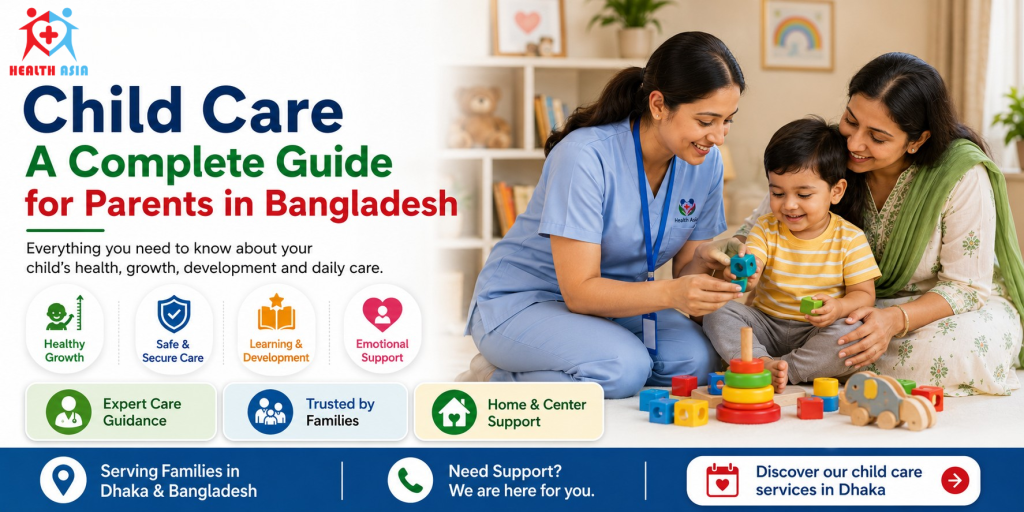
ToggleEvery parent wants their child to grow up healthy, safe, active, confident, and emotionally secure. Still, many parents ask a very basic but important question: what is child care? In simple words, it means the complete support a child needs for healthy growth, daily safety, emotional comfort, learning, nutrition, hygiene, and medical attention when required.
This support is not limited to feeding or bathing. It also includes sleep routines, safe surroundings, play, communication, affection, health monitoring, and age-appropriate development guidance. In Bangladesh, especially in busy cities like Dhaka, families often balance work, home responsibilities, school preparation, and health concerns at the same time. As a result, clear guidance becomes very valuable for parents and guardians.
Good early childhood support helps children build strong habits from the beginning. It supports brain development, physical growth, social behavior, confidence, and emotional security. It also helps parents understand what a child may need at different ages.
This complete guide explains child care meaning in health, the connection between caregiving and development, major types of support, the step-by-step process, and the role of nursing. It is written for Bangladeshi parents who want practical, simple, and reliable information.
If you are a parent in Dhaka and need professional family support, you can discover our child care services in Dhaka through Health Asia.
Child care means looking after a child’s overall needs in a safe, loving, and responsible way. It includes physical care, emotional support, health supervision, learning opportunities, protection, and daily guidance.
A child depends on adults for almost everything during the early years. Babies and young children cannot fully explain hunger, pain, fear, tiredness, discomfort, or emotional needs. Parents and caregivers must observe their behavior, respond with patience, and create a supportive environment.
In simple terms, it includes:
So, when someone asks what is child care, the clearest answer is this: it is the complete daily and health-related support that helps a child grow, learn, stay safe, and feel loved.
The phrase child care meaning in health refers to the support given to protect and improve a child’s physical, mental, emotional, and developmental well-being. In health-related settings, this does not only mean treating sickness. It also includes prevention, regular monitoring, early warning signs, hygiene, nutrition, and parent education.
A health-focused approach may include checking weight, height, feeding habits, sleep patterns, vaccination status, hygiene practices, and common illness symptoms. Parents should also observe changes in energy level, appetite, crying pattern, stool, breathing, skin condition, and behavior.
Health-based support may include:
Children cannot always describe how they feel. Therefore, parents and caregivers need to notice small changes early. Timely attention can prevent minor problems from becoming serious.
Many parents search for what is child care and development because daily caregiving and development are deeply connected. Development means the changes a child goes through while growing physically, emotionally, socially, and mentally.
A child learns to smile, sit, crawl, walk, speak, play, share, think, solve problems, and communicate gradually. These milestones do not happen only because of age. They are also shaped by nutrition, safety, affection, play, sleep, and interaction.
Healthy development is supported through:
For example, when a parent talks to a baby, the baby begins to learn sound and communication. When a toddler plays with blocks, they learn hand control, thinking, and patience. When a caregiver responds calmly to crying, the child feels safe and connected.
This is why daily family support is not just routine work. It directly shapes a child’s future learning, behavior, confidence, and emotional strength.
Bangladeshi parents often face practical challenges. Many families live in crowded urban areas. Some parents work long hours. Some children are cared for by grandparents, relatives, daycare staff, or domestic caregivers. In many homes, parents may not always have easy access to trusted health information.
Because of this, structured guidance is important. It helps families make better decisions about feeding, hygiene, safety, sleep, illness, development, and professional support.
For parents in Bangladesh, strong caregiving practices can help:
For working parents in Dhaka, professional guidance can reduce stress and improve confidence. Health Asia supports families who want practical help with daily routines, safety, and development-focused care. Parents can discover our child care services in Dhaka to learn more.
Good care has several important goals. These goals work together to support a child’s complete well-being.
The first goal is to keep the child healthy. This includes proper food, clean water, hygiene, sleep, vaccination, and medical attention when needed.
Children need a safe environment to explore and grow. Parents should focus on clean surroundings, safe toys, proper supervision, and injury prevention.
A child needs affection, attention, comfort, and calm communication. Emotional security helps children feel protected and confident.
Children learn through play, stories, songs, conversation, movement, and daily interaction. Age-appropriate activities help build language, memory, creativity, and social skills.
Regular routines around eating, sleeping, cleaning, and behaviour help children feel secure. Over time, these habits support independence and discipline.
Parents need clear information. A good support plan helps them understand what is normal, what needs attention, and when professional help may be necessary.
There are different types of child care depending on the child’s age, family situation, health condition, and daily needs. Parents should choose the option that matches their lifestyle, safety expectations, and comfort level.
Home-based support means the child is looked after at home by parents, grandparents, relatives, or a hired caregiver. This is common in Bangladesh because many families prefer children to stay in a familiar environment.
The benefit is comfort and emotional closeness. However, the caregiver should understand feeding, hygiene, safety, emergency response, and basic health warning signs.
In this type, parents manage most daily activities, including feeding, bathing, play, sleep, health checkups, and learning. This creates strong bonding, but it can be challenging for working parents.
Many Bangladeshi families depend on grandparents, aunts, uncles, or other relatives. This can provide emotional warmth and cultural connection. Still, parents should clearly discuss food routines, safety rules, medicine instructions, and screen-time limits.
A daycare or early learning center supports children while parents are at work or busy. A good center should have trained staff, clean rooms, safe toys, proper supervision, and emergency planning.
Before choosing a center, parents should check hygiene, staff behavior, safety measures, child-to-caregiver ratio, and daily routine.
Some families need trained caregivers, home nursing support, newborn assistance, pediatric guidance, or structured family care services. This is useful when parents need extra help after birth, during illness, or while managing work responsibilities.
Some children need extra attention because of illness, recovery, feeding difficulties, developmental concerns, or medical conditions. In such cases, nursing-based support may be helpful.
The child care process means an organized way to understand, plan, provide, and review support for a child. Parents can follow this process at home to create a safer and healthier routine.
Every child is different. Age, health condition, food habits, sleep pattern, behavior, personality, and development level should be considered.
A newborn needs frequent feeding, warmth, sleep, hygiene, and gentle handling. A toddler needs movement, supervision, play, communication, and safe exploration.
Children feel more secure when their day follows a predictable pattern. A useful routine may include feeding time, bath time, play, nap, learning, family interaction, and bedtime.
The routine does not need to be strict every minute. However, it should be consistent enough for the child to feel safe.
Clean hands, safe food, clean feeding items, fresh clothes, and a healthy environment can reduce infection risk. Parents should also keep floors, toys, bedding, and kitchen areas clean.
Food is a major part of growth. Children need age-appropriate meals, enough fluids, and balanced nutrition. For babies and toddlers, parents should follow pediatric advice about breastfeeding, complementary feeding, and special dietary needs.
Play helps children develop movement, thinking, language, creativity, and social skills. Simple activities like singing, storytelling, drawing, naming objects, and safe indoor play can support development.
Safety includes preventing falls, burns, choking, poisoning, electric shock, road accidents, and unsafe handling. Dangerous items should stay out of reach.
Parents should observe whether the child is reaching age-appropriate milestones. These may include smiling, sitting, crawling, standing, walking, speaking, and social interaction.
If parents feel worried, they should seek guidance from a qualified health professional.
A child’s needs change with age. Parents should adjust meals, sleep, play, learning, and safety rules as the child grows.
Child care in nursing means professional support provided by nurses or trained health workers for children. This may happen in hospitals, clinics, health centers, or sometimes at home.
Nursing support focuses on both health and comfort. Children often feel afraid during illness or treatment, so nurses must be gentle, patient, and observant.
Nursing-based pediatric support may include:
In pediatric nursing, parent communication is very important. Since young children may not explain symptoms clearly, nurses often depend on observation and information from family members.
Health Asia understands that families may need professional support during illness, recovery, newborn care, or routine health monitoring. Parents in Dhaka can discover our child care services in Dhaka for more structured guidance.
Physical care means supporting the body’s daily needs. This includes nutrition, sleep, hygiene, clothing, safety, and medical attention.
Children need proper nutrition for growth, energy, immunity, and brain development. Parents should provide age-appropriate meals and avoid unsafe feeding habits. If feeding problems continue, professional advice is important.
Sleep supports growth, mood, and learning. A tired child may become irritated, restless, or less active. A calm bedtime routine helps children rest better.
Regular bathing, clean clothes, handwashing, trimmed nails, and clean surroundings are important. Hygiene habits should start early so children learn them naturally.
Parents should track weight, height, appetite, energy level, and general activity. Regular checkups can help detect concerns early.
If a child has fever, breathing difficulty, repeated vomiting, dehydration signs, unusual weakness, or persistent symptoms, parents should seek medical advice quickly.
Children need emotional support as much as physical care. A child who feels loved and safe is more likely to develop trust, confidence, and better communication.
Emotional support includes:
Children learn emotional behavior from adults. When parents respond with kindness and patience, children slowly learn trust, empathy, and self-control.
Home safety is a major part of raising young children. Many accidents happen inside the home when children are not supervised or when dangerous items are within reach.
Parents should be careful about:
A safe home does not mean stopping children from exploring. It means creating a space where they can explore with lower risk.
A child learns from everyday activities. Learning does not only happen through books or school. It begins at home through conversation, play, affection, and routine.
Parents can support learning by:
Play-based learning is especially useful for young children. It supports language, movement, creativity, memory, and problem-solving.
Choosing support for your child is a serious decision. Parents should look for safety, cleanliness, caregiver behavior, health awareness, and clear communication.
Before choosing a provider, consider the caregiver’s experience, cleanliness of the environment, safety arrangements, feeding support, emergency response process, communication style, child-friendly behavior, hygiene practices, flexibility, and transparency.
Parents should also observe how their child responds to the caregiver or service environment. A good provider should make the child feel safe, respected, and comfortable.
If you are looking for reliable support, discover our child care services in Dhaka through Health Asia and learn how professional guidance can help your family manage daily care with more confidence.
Even careful parents can make mistakes because parenting is not always easy. Knowing common mistakes can help families improve daily routines.
Small changes in appetite, sleep, crying, stool, breathing, or activity can sometimes signal a problem. Parents should observe carefully.
Children should be encouraged to eat, but force feeding can create fear and stress around meals. If feeding problems continue, seek professional advice.
Screens may keep children quiet, but too much screen time can affect sleep, attention, and play habits. Children need real interaction and movement.
Irregular sleep can affect mood, growth, and daily behavior. A calm bedtime routine helps children feel secure.
Young children need active supervision. Accidents can happen quickly, especially near kitchens, stairs, water, or roads.
Every child develops at their own pace. Comparison can create stress for parents and children. If there is a concern, professional guidance is better than panic.
A healthy routine makes parenting easier and gives children a sense of security. It also helps families manage food, sleep, hygiene, play, and learning more smoothly.
A simple daily routine may include:
The routine should match the child’s age and family lifestyle. It does not need to be perfect. Consistency matters more than perfection.
Parents should seek professional help when they feel unsure, overwhelmed, or concerned about their child’s health or development.
Professional guidance may be needed if:
Health Asia can support families who need practical guidance in Dhaka. For better planning, parents can discover our child care services in Dhaka and choose support based on their child’s needs.
Child care is the complete process of helping a child grow in a healthy, safe, loving, and supportive environment. It includes physical support, emotional bonding, hygiene, nutrition, safety, learning, medical attention, and development guidance.
For parents in Bangladesh, raising a child can feel challenging because family life, work pressure, health concerns, and daily responsibilities often come together. However, with proper knowledge and support, families can create a better environment for children.
If you started this guide by asking what is child care, the answer is simple but powerful: it is everything a child needs to grow well. It is not only a responsibility. It is the foundation for future health, confidence, learning, and happiness.
For parents who want reliable support in Dhaka, Health Asia is here to help. Discover our child care services in Dhaka and take the next step toward safer, healthier, and more confident family care.
Child care means the complete support, protection, supervision, and guidance a child needs for healthy growth, safety, learning, emotional comfort, and development.
Child care meaning in health refers to protecting and improving a child’s physical, mental, emotional, and developmental well-being through nutrition, hygiene, monitoring, prevention, and medical support.
Child care and development means supporting a child’s growth through proper feeding, safety, emotional bonding, play, learning, health monitoring, and age-appropriate guidance.
The main types of child care include parent-led care, home-based care, family member care, daycare center support, professional caregiving, and medical or nursing-based support.
The child care process includes understanding the child’s needs, creating a routine, maintaining hygiene, supporting nutrition, encouraging play, ensuring safety, monitoring development, and adjusting care over time.
Child care in nursing means professional support given by nurses or trained health workers to help a child’s health, comfort, treatment, recovery, and parent education.
Early support is important because it helps protect health, improve safety, build emotional security, encourage brain development, support learning, and guide healthy behavior.
Parents should check caregiver experience, cleanliness, safety, communication, feeding support, hygiene practices, emergency planning, and child-friendly behavior before choosing a service.
Parents should seek professional help when a child has feeding problems, illness, growth concerns, sleep issues, developmental delays, or when the family needs structured support.
Health Asia supports families looking for child care guidance and care-related support in Dhaka. Parents can discover our child care services in Dhaka to learn more about available options.
Fill out the form below and our Care Advisors will get back to you with care information you need.