Table of Contents
ToggleFinding the best physiotherapy home service in Dhaka can make recovery easier for patients who struggle with pain, weakness, injury, stroke, surgery recovery, or limited movement. Many people need physiotherapy, but visiting a clinic is not always simple in Dhaka. Traffic, patient weakness, old age, pain during movement, and family responsibilities can make regular clinic visits difficult.
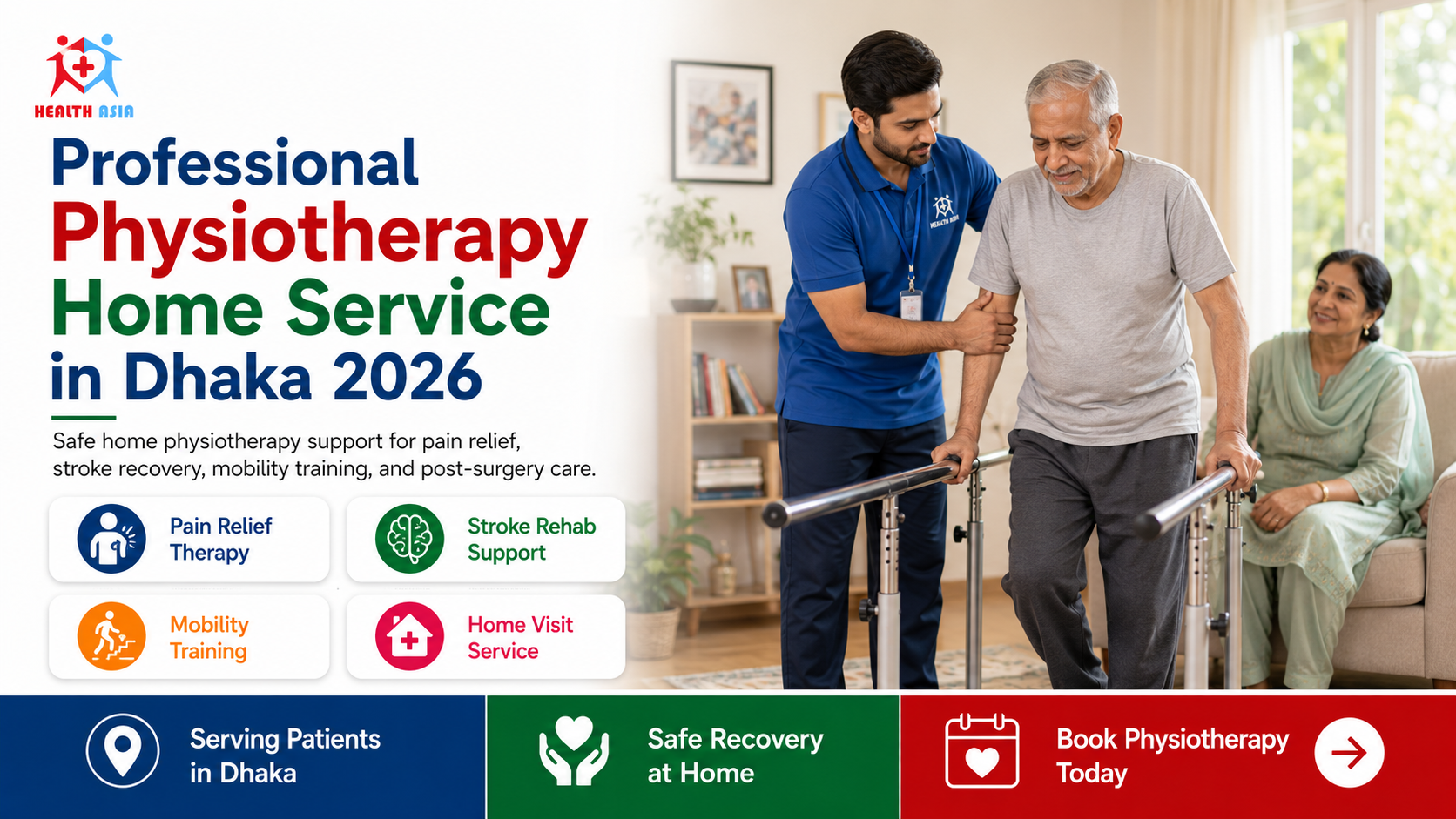
Home physiotherapy helps solve that problem. A trained physiotherapist visits the patient at home, checks the condition, plans safe exercises, guides movement, and supports recovery based on the patient’s needs. It is especially helpful for elderly patients, stroke survivors, bedridden patients, post-surgery patients, and people with back pain, knee pain, frozen shoulder, or mobility problems.
The goal of physiotherapy is not only pain relief. Good physiotherapy helps improve movement, strength, balance, posture, confidence, and daily function. A safe home-based plan can help a patient sit, stand, walk, climb stairs, use the bathroom, dress, and move more comfortably in daily life.
If you are looking for physiotherapy home service in Dhaka, this guide will help you understand what the service includes, who needs it, how to choose a qualified physiotherapist, what affects cost, and what safety points you should know before starting treatment.
Physiotherapy home service means a physiotherapist provides treatment at the patient’s home instead of a clinic or hospital. The therapist visits the patient, assesses the problem, creates a treatment plan, and guides exercises or therapy sessions inside the home environment.
This service is useful when the patient cannot travel easily or needs regular support in a familiar place. For many families in Dhaka, home physiotherapy is more practical than arranging transport, waiting in clinics, or moving a weak patient through traffic.
Home physiotherapy is physical therapy at home. The physiotherapist helps the patient improve movement, reduce pain, restore strength, and manage physical limitations through safe techniques.
A session may include stretching, strengthening exercises, balance training, walking practice, posture correction, joint movement, breathing exercises, manual therapy, and patient education. The exact treatment depends on the patient’s condition.
A physiotherapist does more than show exercises. The therapist checks how the patient moves, where pain occurs, which muscles are weak, whether balance is poor, and how daily activities are affected.
After assessment, the therapist creates a practical plan. For example, a stroke patient may need walking practice and balance training. A back pain patient may need posture correction and core strengthening. An elderly patient may need fall-prevention exercises and safe transfer training.
Clinic physiotherapy may offer more equipment and a controlled treatment environment. Home physiotherapy offers comfort, convenience, and real-life movement practice inside the patient’s own home.
At home, the therapist can see the actual bed, chair, stairs, bathroom setup, and walking space. This helps create more practical recovery advice. For elderly or weak patients, this real-life approach can be very useful.
Dhaka is a busy city. Moving a patient from home to clinic can be stressful, expensive, and time-consuming. That is why many families search for the best physiotherapy home service in Dhaka when they need regular care.
Home visits save time and reduce travel pressure. They also allow family members to observe the session and learn how to support the patient safely.
Traffic is one of the biggest challenges in Dhaka. A patient with pain, paralysis, weakness, or post-surgery stiffness may feel worse after long travel. Regular clinic visits can become difficult if the patient needs several sessions each week.
Home physiotherapy removes that travel burden. The patient receives care in a familiar environment, and the family can plan sessions around daily routines.
Elderly patients may have poor balance, low strength, arthritis, neurological weakness, or fear of falling. Bedridden patients may need gentle movement, positioning advice, breathing support, and mobility training.
For these patients, home physiotherapy Dhaka services can be a practical choice. The therapist can work slowly and safely based on the patient’s tolerance.
Some patients feel more comfortable receiving treatment at home. They can wear comfortable clothing, rest between exercises, and avoid crowded clinic settings.
Family involvement is another major benefit. Caregivers can learn safe transfer methods, walking support, exercise routines, and warning signs that need medical attention.
Physiotherapy home service is suitable for many types of patients. It is not only for elderly people. Adults, children, workers, athletes, surgery patients, and people with chronic pain may also need support.
The most important factor is proper assessment. A qualified physiotherapist should understand the patient’s condition before starting treatment.
Stroke patients often need long-term rehabilitation. They may struggle with weakness on one side of the body, poor balance, stiffness, walking difficulty, shoulder pain, hand movement problems, and reduced coordination.
Stroke physiotherapy at home can include bed mobility, sitting balance, standing practice, walking training, stretching, strengthening, and daily activity practice. Family education is also important because stroke recovery often continues outside the therapy session.
Many people in Dhaka suffer from back pain, neck pain, shoulder pain, knee pain, and posture-related problems. Long sitting, poor work posture, heavy lifting, lack of exercise, and wrong sleeping positions can make pain worse.
A physiotherapist can assess movement, posture, muscle tightness, and pain behavior. Treatment may include exercises, ergonomic advice, manual therapy, stretching, and gradual strengthening.
Elderly patients may need physiotherapy because of weakness, arthritis, poor balance, fear of falling, reduced walking ability, or long bed rest. Home physiotherapy can help improve confidence and daily independence.
The goal is not aggressive exercise. Safe progress matters more. A good plan may include gentle strengthening, balance practice, walking support, chair exercises, and fall-prevention advice.
After surgery, patients may experience stiffness, weakness, swelling, pain, or fear of movement. Physiotherapy can help restore mobility and function when guided properly.
Post-surgery patients should follow the surgeon’s instructions. The physiotherapist should understand the surgery type, restrictions, and recovery stage before starting exercises.
Sports injuries, ankle sprains, knee injuries, shoulder pain, and muscle strains may also need physiotherapy. Home sessions can help with pain control, mobility, strengthening, and safe return to activity.
The therapist should avoid rushing recovery. Returning to activity too early can increase the risk of reinjury.
A physiotherapist home service Dhaka provider may support different conditions. Treatment depends on diagnosis, severity, age, medical history, and patient goals.
Stroke rehabilitation focuses on restoring movement, improving coordination, reducing stiffness, and helping the patient regain daily function. Exercises are usually repeated over time because recovery needs practice and consistency.
A home setting can help because the therapist can train the patient in real daily tasks, such as sitting from bed, standing from a chair, walking in the room, and using support safely.
Back pain may come from posture problems, muscle weakness, disc-related issues, nerve irritation, or lifestyle habits. Sciatica usually causes pain that may travel from the lower back to the leg.
Physiotherapy may include pain-reducing positions, gentle mobility, nerve-friendly movements, core strengthening, posture training, and safe activity advice. Severe pain, numbness, or bladder and bowel changes need urgent medical attention.
Knee pain can affect walking, stair climbing, sitting, standing, and daily work. Arthritis patients may feel stiffness, swelling, or pain during movement.
Home physiotherapy can include strengthening exercises, range-of-motion work, balance training, walking advice, and joint protection education.
Frozen shoulder causes stiffness and pain that limits arm movement. Patients may struggle to comb hair, wear clothes, reach overhead, or sleep comfortably.
A physiotherapist may guide stretching, mobility exercises, posture correction, and gradual strengthening. Progress can take time, so patience is important.
Neck pain is common among people who use phones, laptops, or desks for long hours. Poor posture may cause stiffness, headaches, shoulder tightness, and upper back discomfort.
A physiotherapist can teach posture correction, neck mobility exercises, strengthening, and work setup advice.
After a fracture or surgery, joints and muscles may become stiff. Physiotherapy helps restore movement gradually. The therapist must follow medical restrictions and avoid unsafe pressure on healing tissues.
A good physiotherapy session should not begin with random exercises. It should start with assessment, discussion, and a clear plan.
The physiotherapist asks about the patient’s condition, pain, medical history, previous treatment, current medicines, doctor’s advice, and daily difficulties. The therapist may also check reports if available.
This step helps identify what is safe and what should be avoided.
The therapist may check joint movement, muscle strength, balance, walking pattern, posture, swelling, stiffness, and pain triggers. For stroke or neurological patients, the therapist may also check tone, coordination, and functional ability.
Exercises are selected based on the patient’s condition. A good plan should be realistic. It should not be too hard, too painful, or too confusing.
The therapist may teach exercises for strength, flexibility, balance, coordination, posture, and daily movement.
Some patients may benefit from manual therapy, soft tissue techniques, joint mobilization, or assisted stretching. These should be done carefully and only when suitable for the patient.
The therapist should track improvement over time. Progress may include less pain, better walking, improved range of motion, stronger muscles, better balance, or more independence in daily tasks.
Home advice is also important. Patients often need guidance on sleeping position, sitting posture, walking support, safe exercise frequency, and activity modification.
Choosing the right provider is important because physiotherapy affects health, mobility, and recovery. Do not select a therapist only because the session fee is low.
Ask about the physiotherapist’s education, training, and experience. A qualified physiotherapist should understand anatomy, movement, injury, rehabilitation, and safety.
Experience with your specific condition matters. Stroke rehab, sports injury, elderly care, post-surgery rehab, and chronic pain management may need different skills.
A reliable physiotherapist should assess the patient before giving treatment. If someone starts strong exercises without understanding the problem, that is a red flag.
Good assessment helps prevent wrong treatment and unsafe movement.
The best physiotherapy home service in Dhaka should offer care based on the patient’s condition. A stroke patient needs a different plan than a knee pain patient. An elderly patient needs a different approach than an athlete.
Personalized treatment is better than a one-routine-for-all approach.
Home service should fit the patient’s routine. Ask about available time slots, session duration, emergency rescheduling, and service area coverage.
Consistency is important. A patient may not improve well if sessions are irregular or frequently missed.
The therapist should maintain hygiene, explain exercises clearly, respect patient comfort, and communicate with family members. For elderly or weak patients, safe handling is very important.
Home physiotherapy offers several practical benefits for patients and families in Dhaka.
Patients often feel relaxed at home. They can take breaks, use familiar furniture, and avoid the stress of travel.
Comfort can improve cooperation, especially for elderly patients or people with pain.
Elderly patients may need slow and careful therapy. At home, the therapist can adjust exercises based on energy level, balance, and daily routine.
Family members can also learn how to support walking, sitting, standing, and transfers safely.
Travelling with a weak patient can be difficult. Home physiotherapy reduces travel stress, transport cost, waiting time, and patient discomfort.
Caregivers can observe the session and learn important techniques. This may include safe walking support, bed exercises, positioning, transfer methods, and daily activity guidance.
At home, treatment can be adjusted to the patient’s actual living space. The therapist can suggest changes in chair height, walking path, bed position, bathroom safety, or stair use.
Physiotherapy home service cost in Dhaka can vary. It is better not to rely on fixed pricing without knowing the patient’s condition and location.
One patient may need a short pain-relief session. Another may need long-term stroke rehabilitation. A post-surgery patient may require careful staged therapy. Because needs differ, pricing can also differ.
Complex conditions may require longer sessions or more experienced care. Stroke, paralysis, post-surgery rehab, and elderly mobility training may need detailed planning.
Dhaka location can affect home visit cost because travel time matters. Visit frequency also affects the total cost. Some patients need daily sessions, while others may need two or three sessions per week.
Experienced physiotherapists may charge more, especially for neurological rehab, orthopedic rehab, elderly care, or post-operative recovery. The value often comes from safer assessment and better treatment planning.
A single session may help with assessment or basic guidance. Long-term recovery usually needs a structured plan, repeated sessions, and progress review.
Physiotherapy should be safe and condition-based. Do not start intense exercises without proper assessment if the patient has severe pain, recent surgery, fracture, stroke, heart disease, uncontrolled diabetes, high blood pressure, breathing difficulty, or sudden weakness.
See a doctor first if the patient has sudden severe pain, new paralysis, chest pain, shortness of breath, unexplained swelling, fever after surgery, sudden loss of balance, or worsening neurological symptoms.
Call emergency medical support if the patient has stroke-like symptoms, chest pain, severe breathing trouble, loss of consciousness, sudden confusion, or severe injury. Physiotherapy is not a replacement for emergency medical care.
Health Asia provides physiotherapy home service in Dhaka for patients who need safe, practical, and patient-focused recovery support at home. The service is designed for people who want professional guidance without the stress of regular clinic travel.
Every patient has different needs. Health Asia focuses on understanding the patient’s pain, movement problem, daily difficulties, and recovery goal before planning treatment.
A qualified physiotherapist can guide safe exercises, mobility training, pain management techniques, and home care advice. This helps patients recover with better confidence.
Home-based planning makes therapy more practical. The therapist can work with the patient’s actual bed, chair, walking area, and family support system.
Health Asia supports patients across selected areas of Dhaka. Availability may depend on location, therapist schedule, and patient condition.
The best physiotherapy home service in Dhaka should provide qualified physiotherapists, proper assessment, condition-based treatment, safe exercise planning, and clear family guidance.
Patients with stroke, paralysis, back pain, knee pain, frozen shoulder, post-surgery stiffness, elderly weakness, balance problems, or mobility issues may need home physiotherapy.
Home physiotherapy can be safe for elderly patients when provided by a qualified physiotherapist after proper assessment. Exercises should match the patient’s strength, balance, and medical condition.
Yes, stroke physiotherapy at home can help with movement practice, balance, walking, stiffness management, and daily activity training. The plan should be based on the patient’s condition and doctor’s advice.
The number of sessions depends on the condition, severity, patient age, recovery goal, and progress. Some patients need short-term care, while others need a longer rehabilitation plan.
A physiotherapist checks the patient’s pain, movement, strength, balance, and daily difficulties. Then the therapist provides exercises, movement training, manual therapy if needed, and home advice.
Cost depends on patient condition, location, session duration, visit frequency, and therapist experience. It is better to confirm the latest fee after sharing patient details.
Physiotherapy may help manage back pain through exercises, posture correction, mobility work, strengthening, and activity advice. Severe or unusual pain should be checked by a doctor first.
A prescription may not always be required for general pain or mobility issues, but it is strongly recommended after surgery, stroke, fracture, serious injury, or complex medical conditions.
Contact [Brand Name], share the patient’s condition, location, age, main problem, and preferred time. The team can then confirm availability and suggest the next step.
Fill out the form below and our Care Advisors will get back to you with care information you need.