Table of Contents
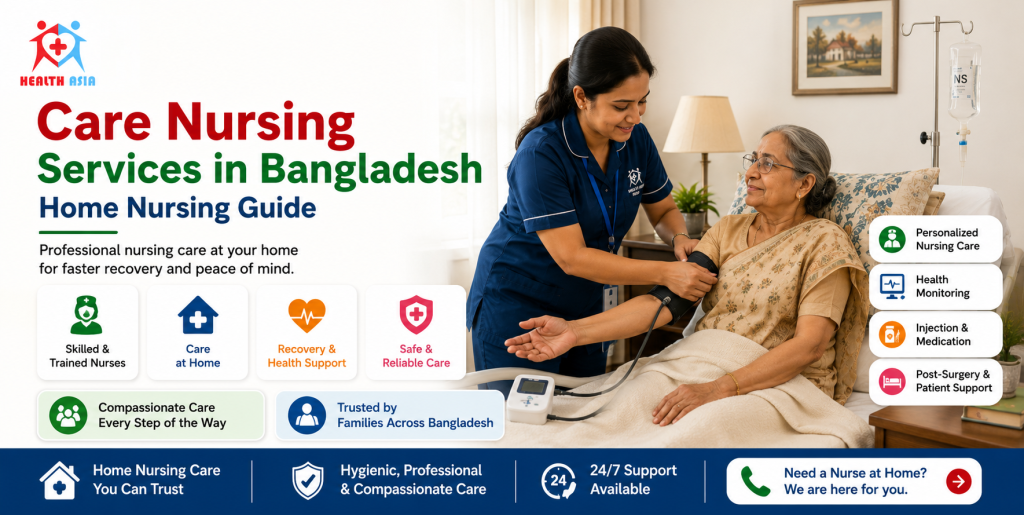
ToggleCare nursing is an important part of home healthcare in Bangladesh. Many families need trained support for elderly parents, bedridden patients, post-surgery recovery, chronic illness, disability care, and long-term patient monitoring. However, visiting a hospital or diagnostic center every time is not always easy, especially when the patient is weak, immobile, or recovering at home.
A professional nurse or caregiver can support the patient at home, maintain daily routines, follow doctor instructions, observe health changes, and reduce pressure on family members. This makes home-based support more practical for families who want safe and comfortable patient care without unnecessary travel.
In Bangladesh, people often search for nursing home care BD, home care nursing, nursing care home, and nursing home care services when they need reliable support for loved ones. This guide explains what this service includes, who needs it, how to choose the right provider, and why professional home nursing can improve comfort, safety, and recovery.
Care nursing means professional support for patients who need medical, personal, or recovery assistance. It may be provided at home, inside a nursing facility, or through a long-term patient care plan. In this guide, the main focus is home-based nursing service in Bangladesh.
A nurse may help with vital sign checks, medicine reminders, wound dressing support, hygiene care, mobility assistance, feeding support, post-surgery observation, elderly support, and daily comfort.
Good patient support is not only about giving medicine. It also includes cleanliness, dignity, communication, emotional reassurance, and coordination with the doctor and family.
Many Bangladeshi families care for elderly parents or sick relatives at home. Family members may want to help, but they may not have the time, training, or physical strength to manage daily patient needs. Professional nursing support helps fill this gap.
Home-based care is growing because stable patients often feel more comfortable in familiar surroundings. Hospitals can be crowded, costly, and stressful. When emergency treatment is not required, a home nurse can support daily care, routine monitoring, and recovery.
This approach helps patients stay near family while receiving organized support.
Older adults may need help with bathing, feeding, walking, medicine schedules, blood pressure checks, diabetes monitoring, and fall prevention. A trained nurse can observe changes in condition and guide the family when extra medical attention may be needed.
This is especially useful for families where adult children are busy with work or live away from home.
Bedridden patients need regular attention. Without proper support, they may develop pressure sores, stiffness, infections, poor hygiene, weakness, and emotional stress.
A home nurse can assist with position changes, skin care, hygiene, feeding, movement, and daily observation. These small routines can prevent bigger problems.
Many patients leave the hospital but still need support at home. They may require wound care, medicine routine, vital sign monitoring, mobility help, or follow-up preparation.
Home care nursing makes this recovery period easier and safer when the patient is stable enough to remain at home.
This service is useful for many types of patients. It is not only for elderly people. Anyone who needs regular recovery, personal, or health support may benefit from a trained nurse.
Older patients may have weakness, memory problems, diabetes, high blood pressure, arthritis, stroke history, or walking difficulty. A nurse can help maintain daily routine, comfort, hygiene, and safety.
After surgery, patients may need dressing support, movement assistance, medicine reminders, and observation for warning signs. Home-based nursing can reduce recovery stress and help the family follow doctor instructions correctly.
Stroke survivors often need long-term help. They may face difficulty with movement, speech, eating, or daily activities. A trained caregiver or nurse can support basic care, safe movement, feeding, and regular monitoring.
Bedridden patients need frequent repositioning, hygiene support, feeding help, and pressure sore prevention. Without proper care, complications can develop quickly.
Patients with diabetes, hypertension, kidney disease, heart disease, respiratory illness, or neurological problems may need regular monitoring. A nurse can track vital signs and help the family follow the care plan.
People with physical disabilities may need assistance with daily living. Home nursing support can help with personal care, movement, comfort, and safety.
Some patients need comfort-focused support due to serious illness. In these cases, nursing assistance can protect dignity, support hygiene, reduce discomfort, and guide the family through daily care routines.
The exact service depends on the patient’s condition and doctor’s advice. Still, most professional home nursing plans include several core tasks.
A nurse may check blood pressure, pulse, temperature, oxygen level, blood sugar, and general condition. These checks help families notice changes early.
Many patients take several medicines every day. Missing doses or taking the wrong dose can be risky. A nurse can help follow the schedule given by the doctor.
Post-surgery wounds, diabetic wounds, injury wounds, and pressure sores may need careful dressing. A trained nurse can support wound care according to medical instructions.
Patients may need help with bathing, cleaning, oral care, changing clothes, toileting, and grooming. Proper hygiene helps prevent infection and improves comfort.
Some patients cannot eat or drink without support. A nurse or trained caregiver can assist with meals, fluid intake, and diet routine based on doctor or family guidance.
Patients may need help sitting, standing, walking, turning in bed, or moving safely. Proper support can reduce fall risk and make daily life easier.
Bedridden patients are at risk of pressure sores. Regular position changes, skin checks, clean bedding, and dry clothing are very important.
A trained nurse observes fever, pain, breathing difficulty, weakness, swelling, confusion, or sudden changes. Early observation helps families contact the doctor faster.
Patients may feel lonely, anxious, or helpless. A kind nurse can provide comfort through respectful communication, routine, and patient handling.
If your elderly parent, bedridden family member, or recovering patient needs daily support, Health Asia can help arrange professional care nursing services at home. From patient monitoring to hygiene support and recovery care, the team helps families manage home-based care with comfort and confidence.
Many people search for nursing home care BD or nursing care home when they need patient support. However, home care nursing and nursing care home are different.
Home care nursing means a nurse visits or stays at the patient’s home. The patient receives support in a familiar environment. This option is suitable for elderly patients, bedridden patients, post-surgery patients, and long-term recovery cases.
A nursing care home is a facility where patients stay and receive support. It may be useful when a patient needs full-time supervision and the family cannot manage care at home.
The better option depends on the patient’s condition, family support, budget, and doctor advice. Home support is better when the patient can safely stay at home. A nursing facility may be better when constant institutional supervision is needed.
Home-based nursing offers practical benefits for both patients and families.
Patients often feel calmer in their own surroundings. Familiar rooms, family presence, and personal routines can reduce stress.
A home nurse focuses on one patient at a time. This allows closer observation and more personal support than crowded settings.
Family members can stay close to the patient and understand the daily care process. This builds trust and improves communication.
Moving elderly or weak patients to hospitals can be difficult. Home support reduces unnecessary travel, waiting time, and physical discomfort.
A nurse can help maintain a daily routine for medicine, food, hygiene, exercise, rest, and observation.
Safety should always come first. A nurse should be trained, respectful, careful, and able to follow doctor instructions.
The World Health Organization highlights the importance of person-centred and coordinated care for older people. This idea is relevant for home healthcare because elderly and dependent patients need support that respects their comfort, ability, dignity, and personal needs.
Always choose trained nursing staff. A professional nurse understands patient handling, basic monitoring, hygiene, infection prevention, and documentation.
A care plan should include the patient’s condition, medicine schedule, diet needs, hygiene routine, mobility level, and emergency contact instructions.
The nurse should update family members regularly. Good communication prevents confusion and builds trust.
The nurse should follow doctor advice. Any major change in health should be reported to the family and doctor quickly.
Hand hygiene, clean bedding, safe dressing methods, and proper waste disposal are important for patient safety.
Choosing the right provider matters. Poor-quality service can create stress, safety risks, and a bad patient experience.
Ask about the nurse’s training, experience, and patient care background. Experience matters for bedridden, elderly, stroke, and post-surgery patients.
Not every patient needs the same level of support. Some need basic help. Others require skilled nursing assistance. Choose based on the patient’s condition.
Service may be hourly, day shift, night shift, or 24-hour support. Discuss the schedule clearly before starting.
Ask what the nurse will do and what is not included. Clear responsibility prevents misunderstanding.
Ask what happens if the patient’s condition suddenly changes. There should be a clear communication process.
Cost depends on duty hours, patient condition, nurse qualification, and service duration. Always confirm pricing before booking.
A good nurse should be patient, respectful, calm, clean, and responsible. Patient dignity should always be protected.
Elderly care is one of the most common reasons families search for home-based patient support.
Older adults may need help with eating, bathing, dressing, walking, toileting, and medicine routines.
Falls are a major risk for older adults. A nurse can reduce this risk by supporting movement, keeping the room safe, and observing weakness.
Many older adults have diabetes, high blood pressure, heart disease, or breathing problems. Regular monitoring helps families stay informed.
Some elderly patients may forget medicine, meals, or daily routines. Nursing support can help maintain structure and safety.
Bedridden care requires patience, routine, and skill.
Changing the patient’s position regularly helps reduce pressure sores and discomfort.
Skin should be checked for redness, wounds, dryness, or signs of infection.
Clean bedding, dry clothes, and proper hygiene reduce infection risk and improve comfort.
A nurse can help the patient eat safely and maintain fluid intake based on doctor or family guidance.
Recovery after surgery needs careful attention.
A nurse can observe the wound area for swelling, redness, discharge, or pain changes.
Post-surgery patients may have pain medicine, antibiotics, or other medicines. A nurse helps maintain the schedule.
Some patients need help walking slowly, sitting, standing, or changing position after surgery.
A nurse can help prepare reports, medicine lists, and patient condition notes for the next doctor visit.
The cost depends on several factors.
Simple support may cost less than care for a bedridden or post-surgery patient who needs more skilled assistance.
Hourly support, 12-hour duty, night duty, and 24-hour service have different pricing.
A trained nurse may cost more than a basic caregiver. The right choice depends on medical need.
Service cost may vary by city and area. Dhaka, Chattogram, Narayanganj, Gazipur, and other locations may have different rates.
Wound dressing, elderly support, post-surgery observation, and complex patient handling may affect the total cost.
Families should consider professional help when a loved one starts needing regular assistance with daily care, recovery, movement, hygiene, medicine routines, or health monitoring. Early support can prevent stress, reduce caregiver pressure, and make home-based patient care safer.
You may need a nurse when the patient struggles with eating, bathing, dressing, walking, or using the toilet. Support is also important when regular medicine reminders, blood pressure checks, diabetes monitoring, wound care, or post-surgery observation are needed.
Professional help becomes even more valuable for bedridden patients, elderly parents, stroke survivors, disabled individuals, and people recovering from surgery or long illness. These patients often need careful positioning, skin care, feeding assistance, mobility support, and continuous observation.
Families should also call for help when home care becomes physically or emotionally difficult to manage alone. A trained nurse can follow doctor instructions, maintain routine, and keep family members updated about changes in the patient’s condition.
In simple terms, care nursing support is the right choice when the patient is stable enough to stay at home but still needs professional attention, daily assistance, and safe monitoring.
Need reliable care nursing services for your loved one? Health Asia provides home care nursing support for elderly patients, bedridden patients, post-surgery recovery, and long-term patient care. Contact the team today to arrange professional nursing support at home and make patient care easier for your family.
Care nursing services in Bangladesh are important for families who need safe, respectful, and professional patient support at home. Whether the patient is elderly, bedridden, recovering after surgery, or living with a chronic illness, home care nursing can make daily care easier and more comfortable.
A good service should include trained staff, clear communication, hygiene support, patient monitoring, doctor-guided routines, and respect for patient dignity. Families should choose a provider carefully and make sure the nurse matches the patient’s condition.
Home-based nursing is not only a service. It is support for the patient and relief for the family. With the right care plan, patients can receive comfort, attention, and professional support in the place they know best — their own home.
Care nursing means professional nursing support for patients who need health monitoring, personal care, medicine support, hygiene assistance, mobility help, or recovery care.
Elderly patients, bedridden patients, post-surgery patients, stroke survivors, disabled patients, and chronic illness patients may need home-based nursing help.
Home care nursing means a nurse provides patient support at home. It helps stable patients receive daily assistance without staying in a hospital or facility.
Yes. It is helpful for older adults who need daily support, medicine reminders, fall prevention, hygiene care, and health monitoring.
Nursing home care BD refers to patient support in Bangladesh, either at home or in a nursing facility, depending on the patient’s need.
Yes. A trained nurse can help with position changes, hygiene, feeding, skin care, bed sore prevention, and patient observation.
Home support is suitable for stable patients who need regular help. Hospital care is better for emergency, critical, or advanced medical cases.
Check nurse training, experience, duty hours, responsibilities, emergency process, cost, and communication quality before booking.
The cost depends on patient condition, nurse qualification, duty hours, location, and special care needs.
Book support when the patient needs daily assistance, recovery care, hygiene help, medicine routine, mobility support, or doctor-recommended home nursing.
Fill out the form below and our Care Advisors will get back to you with care information you need.