Table of Contents
ToggleMany families search for caregiver in dhaka when an elderly parent, sick patient, or recovering loved one needs help at home. But the real challenge is not only finding someone quickly. It is finding a safe, trained, and reliable person who can care for your loved one with patience and responsibility.
The wrong caregiver can create stress inside the home. Patients may miss proper support with meals, movement, hygiene, toilet use, or daily comfort. Families may also face late attendance, unclear duties, poor behaviour, or no replacement option.
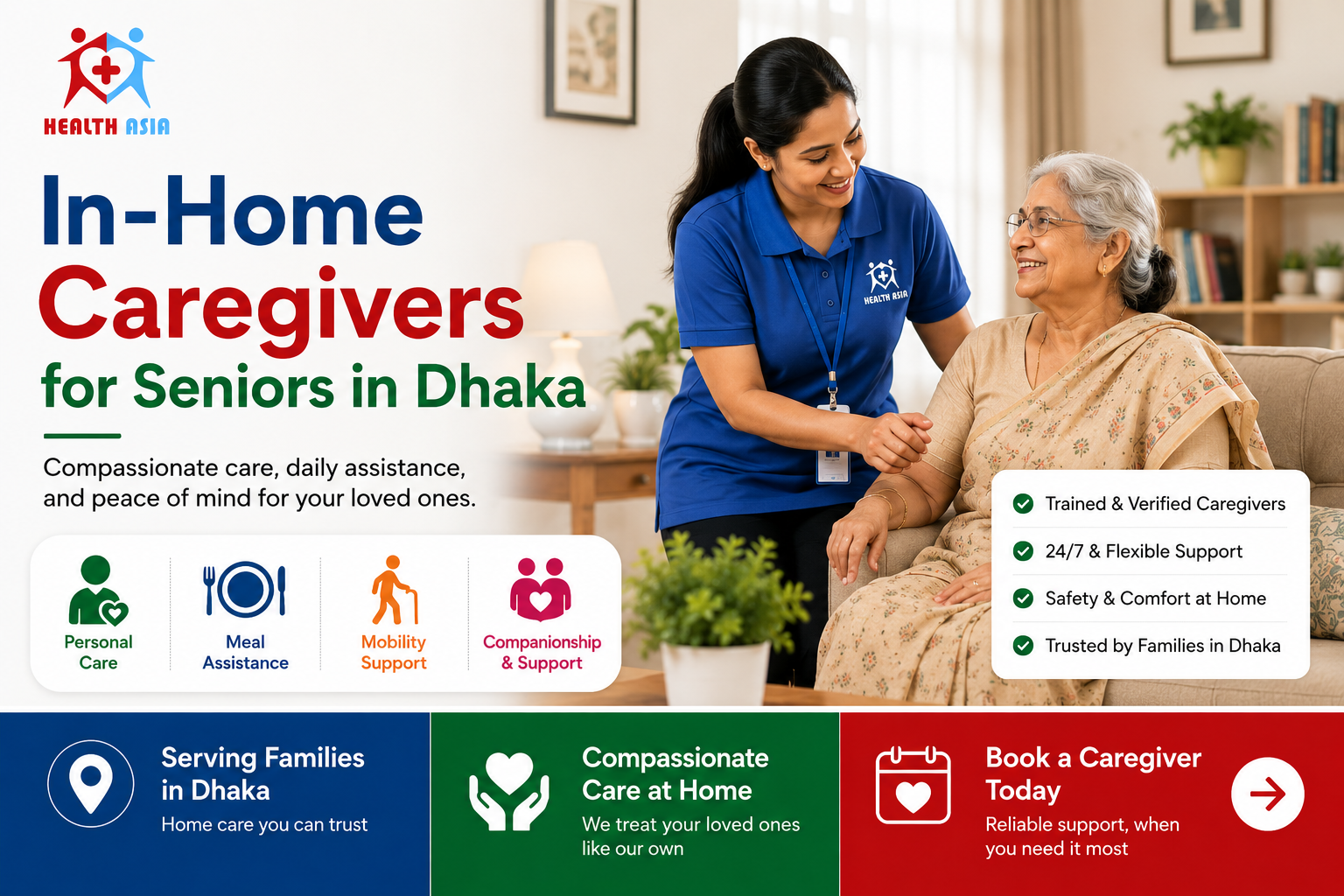
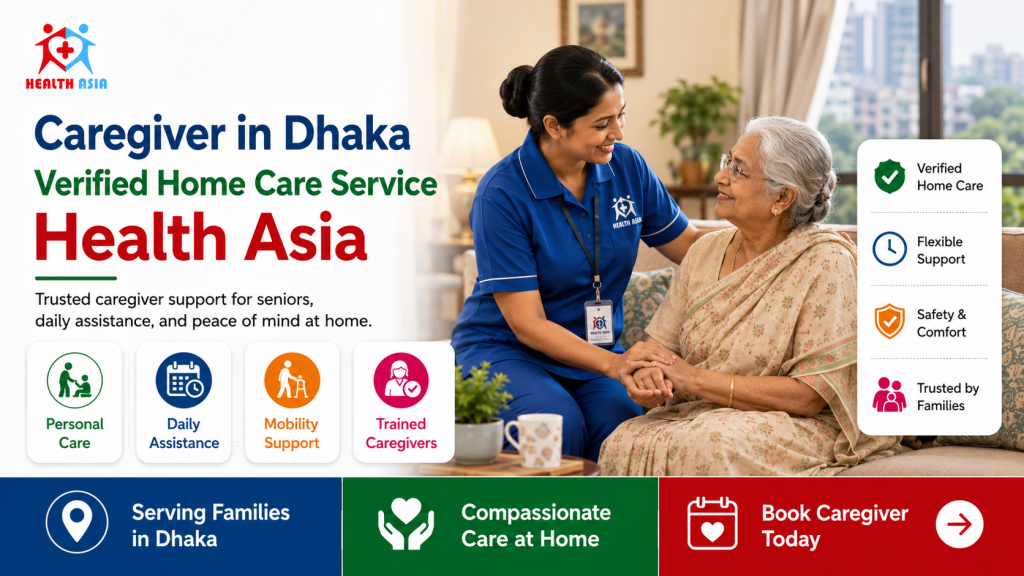
A caregiver is a trained support person who helps a patient or elderly person with daily living needs at home. They may assist with bathing, feeding, walking, toilet support, diaper change, position change, and companionship.
This role is different from a nurse. Nurses handle clinical tasks. Caregivers mainly support comfort, hygiene, mobility, safety, and daily routine.
For many families, this support makes home care easier. It reduces pressure on relatives who may already be managing work, children, hospital visits, and medicine schedules.
According to Bangladesh’s 2022 Population and Housing Census context, people aged 60 years or above make up 9.28% of the population. That means more families now need practical home support for elderly parents, bedridden patients, and people recovering after hospital discharge.
Caregiver duties depend on the patient’s condition. A stable elderly person may only need companionship and walking support. A bedridden patient may need feeding help, diaper change, position change, and hygiene care.
Common caregiver duties include helping the patient sit, stand, or walk safely. They may also assist with bathing, grooming, dressing, toilet use, and meal support.
During the shift, the caregiver should keep the patient’s room clean and comfortable. They should also inform the family if the patient becomes weaker, restless, confused, or unusually quiet.
A trained caregiver can also reduce fall risk. This matters for elderly people who feel dizzy, weak, or unsteady while walking.
A caregiver cannot perform medical tasks that require nursing or clinical training. Families should understand this before booking anyone.
They should not give injections, change prescriptions, diagnose illness, manage IV saline, or perform wound dressing. A caregiver should also not insert or remove a catheter.
This boundary protects the patient. It also helps the family choose the right type of home support.
You need a nurse when the patient requires medical care, not only daily support. Nursing care is better for wound dressing, injections, catheter care, post-surgery observation, oxygen monitoring, or vital sign tracking.
Daily care is different. If the patient needs help with meals, movement, hygiene, toileting, and companionship, a caregiver may be enough.
Some families need both. A bedridden patient may need a caregiver for daily support and a nurse for clinical tasks.
If your loved one has chest pain, sudden breathing trouble, a serious fall, sudden confusion, or loss of consciousness, go to the nearest hospital emergency department first. A caregiver is not a replacement for emergency medical care.
Before booking a home caregiver in Dhaka service, do not only ask about availability. Check how the caregiver is verified, trained, supervised, and replaced if needed.
A safe service should be clear about identity, duty, shift time, and responsibility. This matters more when someone will stay inside your home for many hours.
Start by confirming whether the caregiver’s identity is verified. A National ID copy helps confirm the person’s basic identity.
This is not about distrust. It is about patient safety. The caregiver enters the patient’s room, handles personal items, and spends time around a vulnerable person.
Training should be checked before booking. A caregiver does not need to be a nurse, but they should know patient handling, hygiene, feeding support, and safe movement assistance.
Good training matters because caregiving looks simple from outside. In real home care, small mistakes can hurt the patient.
Before allowing anyone into the home, confirm whether the provider checks the caregiver’s background. That step gives families more confidence and reduces risk.
It is especially important for elderly patients, female patients, children, and bedridden people. These patients may not always explain discomfort clearly.
Not every caregiver will match every family. Sometimes the patient feels uncomfortable. In other cases, the caregiver’s timing, behaviour, or skill level may not fit the patient’s needs.
Before booking, clearly confirm what happens if replacement is needed. A proper caregiver service should have a simple replacement process.
Many families prefer a female caregiver for female patients. Others prefer a male caregiver for male patients or for heavier mobility support.
There is no single right choice. The best option depends on privacy, comfort, patient weight, mobility level, and family preference.
Confirm this before booking. Last-minute changes can delay service.
Night care is different from day care. A night caregiver may need to help with toilet support, diaper change, turning the patient, medicine reminders, or fall prevention.
Before confirming night duty, ask whether the caregiver stays awake during the shift. Also confirm duty hours, patient handling needs, and backup support.
Clear expectations prevent confusion after the caregiver arrives.
Families often compare a caregiver agency in Dhaka with direct hiring. Direct hiring may look cheaper at first. But it also puts more responsibility on the family.
An agency usually gives better structure. There may be identity checking, duty confirmation, replacement support, and someone to call if a problem happens.
Direct hiring can work if the family already knows the caregiver personally. For unknown caregivers, the risk is usually higher.
| Factor | Agency | Direct Hire |
|---|---|---|
| Background check | Usually handled | Family must check |
| Replacement support | Often available | Usually not available |
| Accountability | Provider is responsible | Family manages alone |
| Cost | Slightly higher | Often lower |
| Trust level | More structured | Depends on reference |
| Shift planning | Easier to arrange | Can be difficult |
| Emergency absence | Backup may be possible | No backup in most cases |
For elderly or bedridden patients, an agency is usually safer. The accountability structure protects your loved one and reduces pressure on the family.
Caregiver cost in Dhaka depends on shift length, patient condition, caregiver experience, gender preference, and service location.
Based on publicly available market pricing, basic caregiver service in Dhaka can start from around 1,140 BDT per day. This is only a general market reference. The final cost can change based on the patient’s needs.
A patient who only needs companionship may cost less. A bedridden patient who needs diaper change, feeding support, and position change may cost more.
Several things can affect caregiver pricing. Shift length is one of the biggest factors.
An 8-hour shift, 12-hour shift, and 24-hour shift will not cost the same. Night duty may also cost more than day duty.
Patient condition matters too. A weak elderly patient may need light support. A bedridden stroke patient may need more hands-on care.
Other price factors include male or female caregiver preference, travel distance, urgent booking, diaper care, feeding support, and long-term monthly plans.
💡 Price Note:Caregiver cost may vary based on patient condition, shift time, location, and caregiver availability. For current plans and availability, please check the caregiver service or message on WhatsApp before booking.
Cheap service is not always better. A low price can become stressful if the caregiver is unreliable, unverified, or difficult to replace.
A better approach is to compare value. Ask what is included. Check if the caregiver is verified. Confirm whether replacement is available.
Clear service is safer than a cheap but unclear arrangement.
Caregiver home service in Dhaka is usually easier to arrange when the patient’s area is clearly shared at the beginning. Common service areas include Dhanmondi, Gulshan, Banani, Mirpur, Uttara, Mohammadpur, Bashundhara, Badda, Rampura, Malibagh, Wari, and nearby locations.
Location affects timing. Dhaka traffic can delay caregiver arrival, shift changes, and replacement support.
For faster matching, families should share the exact address, preferred shift, patient condition, and caregiver gender preference. If your area is outside the common zones, send the location first and confirm availability before booking.
Booking a caregiver should not feel confusing. A family should know what information to share, what to expect, and how the caregiver is selected.
Start with the patient’s age, gender, diagnosis, mobility level, and current condition. Mention if the patient is bedridden, weak, confused, or recovering after hospital discharge.
This information helps match the caregiver properly.
Next, list the exact tasks. Do not simply say “take care of the patient.”
Mention feeding support, bathing support, toilet help, diaper change, walking assistance, night supervision, or companionship. A clear duty list prevents misunderstanding.
Most families choose day shift, night shift, or full-day support. The right shift depends on when the patient needs the most help.
If your parent is restless at night, night duty may be better. For bathing, meals, and walking support, day duty may be enough.
Tell the provider if the patient needs a male or female caregiver. This helps protect comfort and privacy.
Female patients often prefer female caregivers. Male patients with heavy movement support may need a male caregiver.
The first shift is important. Watch punctuality, hygiene, communication, behaviour, and patient comfort.
A good caregiver should speak gently, wash hands before patient contact, follow the duty list, and inform the family about any concern.
The first day tells you a lot about the caregiver. Do not only check if the person arrived on time.
Watch how they speak to the patient. Notice whether they rush, ignore, or handle the patient roughly.
A good caregiver should be calm, respectful, patient, and clean. They should ask before moving the patient and avoid unnecessary phone use.
Use this quick checklist:
Small signs matter. A caregiver’s attitude is as important as their skill.
Many families hire in a hurry. That is understandable when a patient needs help urgently.
Still, a few checks can prevent bigger problems later.
Do not give a vague instruction like “just take care of the patient.” That sentence creates confusion.
Write the exact duties instead. Mention feeding, bathing, toilet support, walking help, diaper care, or night supervision.
Sometimes a caregiver may not match the patient. This can happen even when the caregiver is experienced.
Ask about replacement before booking. Waiting until there is a problem can make the situation harder.
Low price can be tempting. But home care is personal.
The caregiver will spend hours near your loved one. Choose someone verified, trained, and accountable.
Patient comfort matters most. If your parent feels uncomfortable, listen carefully.
Caregiving is not only physical work. It is also emotional support, patience, and trust.
A good caregiver service Dhaka provider should be clear, responsive, and organized. Families should not have to chase for basic answers.
A reliable provider should offer verified caregiver identity, clear duty confirmation, shift planning, replacement support, and family communication.
Good service also means honest guidance. If the patient needs a nurse instead of a caregiver, the provider should say that clearly.
The right provider should never promise everything without understanding the patient’s condition first.
Hiring a caregiver is not only a service decision. It is a family safety decision.
The right caregiver can help your parent stay comfortable at home. They can reduce stress for the family and make recovery easier after illness, surgery, or hospital discharge.
Before hiring, check identity, training, duties, shift timing, replacement policy, and patient comfort. Do not rush only because someone is available.
If you need safe caregiver support in Dhaka, send the patient’s condition, location, and preferred shift to Health Asia on WhatsApp. Our team will help you choose the right option and respond within 2 hours.
A caregiver in Dhaka is a trained support person who helps elderly, sick, or recovering patients at home. Duties may include feeding, hygiene support, walking help, and companionship.
Start with identity verification, training, background check, replacement policy, and clear duty confirmation. A trusted service should explain everything before sending a caregiver.
The best caregiver service in Dhaka is one that provides verified caregivers, clear duties, replacement support, and fast communication. The right choice depends on the patient’s condition.
No. A caregiver helps with daily living support. A nurse handles clinical tasks like injections, wound dressing, catheter care, and medical monitoring.
Yes, female caregivers are often available for female patients, elderly mothers, and patients who need privacy during bathing, dressing, or toilet support.
A caregiver company in Dhaka provides trained home support staff for elderly people, sick patients, and recovering patients. It also manages booking and replacement support.
A home caregiver helps with meals, movement, bathing, toileting, companionship, medicine reminders, and basic daily support.
Basic caregiver service can start from around 1,140 BDT per day based on public market pricing. Final cost depends on shift time, patient condition, area, and availability.
Yes, night caregivers can support patients who need help with toilet use, diaper change, movement, medicine reminders, or supervision during sleep hours.
Choose a nurse if the patient needs injections, wound dressing, catheter care, oxygen monitoring, or clinical observation. Choose a caregiver for daily living support.
Fill out the form below and our Care Advisors will get back to you with care information you need.