Table of Contents
ToggleElderly patients often need regular health monitoring, but travelling to a hospital or diagnostic center can feel stressful. Weakness, mobility problems, chronic illness, post-surgery recovery, or age-related discomfort can make even a simple test difficult. In this situation, an ECG home service for elderly patients can make heart monitoring easier, safer, and more comfortable for the patient and family.
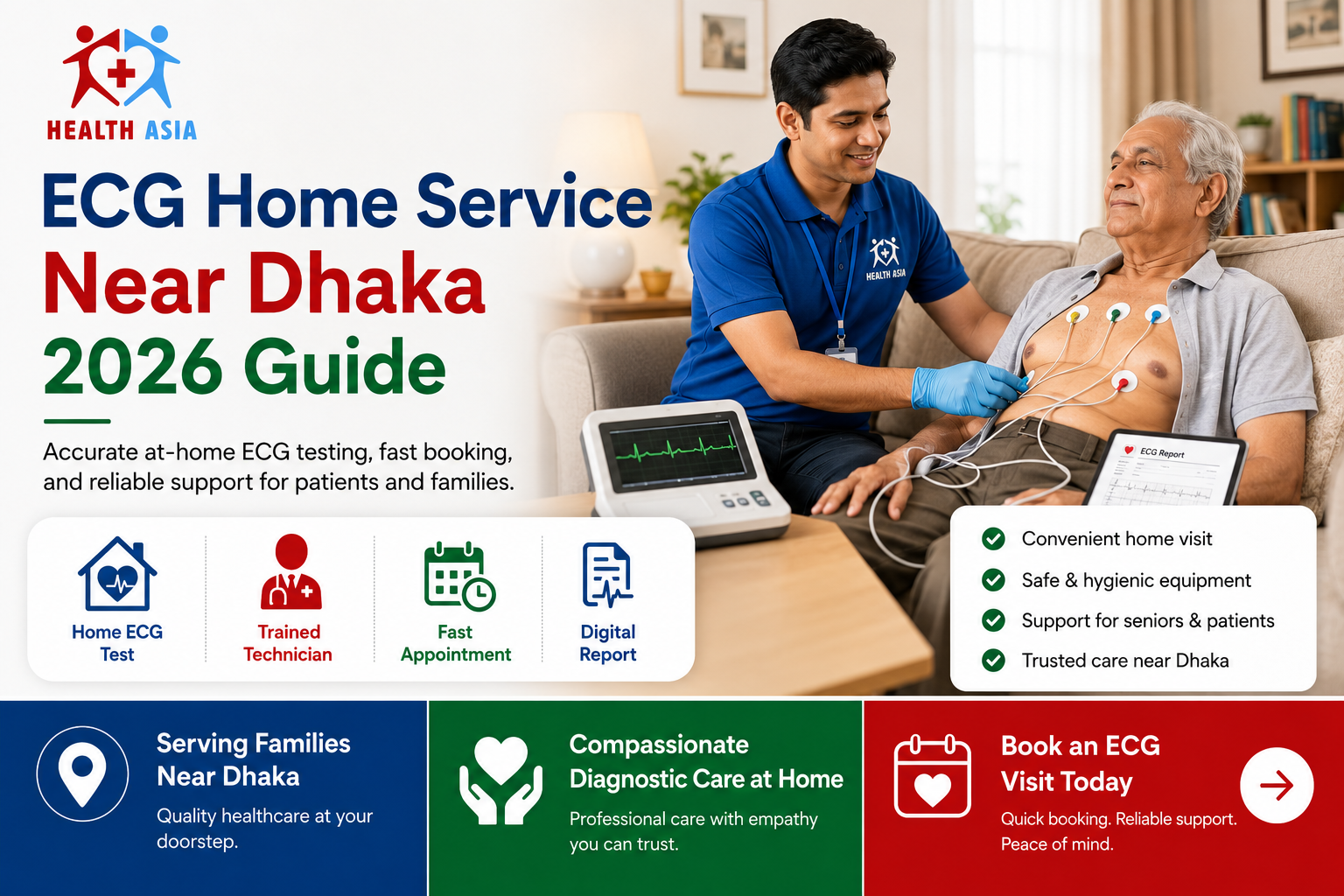
An ECG, also called an electrocardiogram, records the electrical activity of the heart, including heart rate and rhythm. NHS describes ECG as a test that usually feels quick and painless. With portable ECG support, trained healthcare staff can visit the patient’s home, prepare the test, record the ECG, and guide the family about the report process.
For elderly patients, comfort matters. A familiar home environment can reduce travel stress and help the patient stay relaxed during the test. More importantly, home ECG support helps families arrange doctor-recommended monitoring without unnecessary movement.
Older adults may face health conditions that need regular observation. Some patients have high blood pressure, diabetes, heart disease history, weakness, dizziness, palpitations, or irregular heartbeat concerns. In these cases, doctors may recommend an ECG to understand the heart’s rhythm and electrical activity.
Travel can create extra pressure for elderly patients. A long journey, traffic, waiting area, staircases, and physical movement can make the process tiring. Home ECG support reduces that burden.
Families also benefit from this service. They can arrange the test in a familiar setting, keep previous reports nearby, and support the patient throughout the process. A trained technician can complete the test while the patient rests comfortably.
An ECG test checks the electrical signals that the heart produces when it beats. During a standard ECG, a trained healthcare professional attaches small sticky patches, called electrodes, to the patient’s arms, legs, and chest. These electrodes connect to the ECG machine and record the heart’s electrical signals.
Doctors may use ECG results to review heart rhythm, heartbeat pattern, and possible signs of heart-related problems. NHS notes that healthcare professionals may recommend ECG when they think a patient has symptoms related to heart attack, coronary heart disease, or arrhythmia.
An ECG does not answer every heart-related question. Sometimes a doctor may suggest more tests after reviewing symptoms, medical history, and ECG findings. Therefore, patients should always let a qualified doctor interpret the report.
Portable ECG support brings the test process to the patient’s location. A trained technician visits the home with ECG equipment, prepares the patient, places the electrodes, records the tracing, and explains how the report process works.
The patient usually lies down and stays still during the recording. Movement, talking, or muscle tension can affect the tracing, so the technician may ask the patient to relax for a short time.
NHS explains that ECG may happen in different ways, including resting ECG, portable ECG over a period of time, or exercise ECG, depending on the symptoms and condition. For home support, the service usually focuses on convenience, comfort, and doctor-recommended monitoring.
ECG home service can help many elderly patients and families. It works especially well when the patient cannot travel easily or needs a calmer testing environment.
Elderly patients with limited mobility may find home ECG more comfortable. Bedridden patients may also need diagnostic support at home because movement can create difficulty. People recovering from illness or surgery may prefer home testing when a doctor recommends an ECG.
Patients with a history of high blood pressure, diabetes, heart disease, palpitations, dizziness, chest discomfort, or irregular heartbeat concerns may also need ECG monitoring under medical advice.
Families can arrange ECG home service when a doctor recommends ECG and the patient does not need emergency hospital care. Home support can help during routine monitoring, elderly care, follow-up testing, and mobility-limited situations.
Some families arrange ECG at home when an elderly patient reports palpitations, mild chest discomfort, dizziness, unusual tiredness, or heartbeat irregularity. However, symptoms can have many causes. A doctor must review the report and guide the next step.
For severe chest pain, breathing difficulty, fainting, heavy sweating, sudden weakness, or serious emergency symptoms, families should seek urgent medical care immediately. Home ECG should not delay emergency treatment.
When families search for ECG home service near me, they usually want a service that responds clearly, sends trained staff, and handles elderly patients with care.
The process usually starts with a booking request. The family shares the patient’s name, age, location, condition, preferred time, and doctor’s advice if available. Then the provider arranges a home visit based on availability and patient needs.
After arrival, the technician prepares the patient and places electrodes in the correct areas. The ECG machine records the heart’s electrical activity. Once the recording ends, the technician removes the electrodes and explains the report delivery process.
Elderly patients often feel more comfortable at home. They can rest before the test, avoid travel pressure, and stay close to family members.
Home ECG also helps patients who use wheelchairs, walkers, or beds. Instead of arranging transport, the family can bring the test to the patient. This approach makes the process more practical for many households.
A calm home setting can also help the technician record a better tracing. When the patient stays relaxed and still, the ECG recording may become clearer.
A standard ECG generally works as a non-invasive test. It records electrical activity from the body through electrodes. It does not send electricity into the heart.
The technician should maintain privacy, hygiene, and patient comfort throughout the visit. Elderly patients may need extra support while changing position or lying down. Family members can stay nearby if the patient feels more comfortable.
NHS also advises people to wear clothing that they can take on and off easily and avoid putting lotions, oils, or talcum powder on the skin before an ECG. These small steps can help the technician place electrodes properly.
Before booking ECG home service, share the patient’s age, location, symptoms, medical history, doctor’s advice, and preferred schedule. Also mention whether the patient has mobility problems, breathing difficulty, severe pain, previous heart disease, or recent hospital history.
Clear information helps the service provider guide the family properly. It also helps the technician prepare for the visit.
Keep previous ECG reports, prescriptions, discharge summaries, and doctor notes ready. These documents can help the doctor compare results and understand the patient’s condition better.
Both home ECG and diagnostic center ECG can record heart activity. The better option depends on the patient’s condition, comfort, and doctor’s advice.
A diagnostic center may suit patients who can travel easily and need multiple tests in one visit. Home ECG suits elderly patients, weak patients, bedridden patients, and people with limited mobility.
Families should choose the option that protects the patient’s safety and comfort. If emergency symptoms appear, they should go to a hospital or contact emergency medical support instead of waiting for a home visit.
An ECG gives useful information about heart rhythm and electrical activity. However, it cannot detect every heart problem. NHS notes that some patients may need other tests after ECG results.
A doctor may suggest additional tests such as blood tests, echocardiography, Holter monitoring, stress testing, or specialist consultation depending on symptoms and medical history.
Patients and families should avoid self-diagnosis. A qualified doctor should review the ECG result and explain what it means.
Health Asia helps elderly patients and families arrange convenient ECG home service support. The service focuses on comfort, careful handling, and clear communication, especially for patients who struggle to travel.
Families can contact Health Asia with the patient’s location, condition, and doctor’s advice. The team can guide the booking process and help arrange portable ECG support at home.
Health Asia also understands that elderly care needs patience. The goal is to make the ECG process smoother for the patient while helping families get reliable diagnostic support.
Looking for ECG home service for an elderly patient? Contact Health Asia today for professional portable ECG support at home. Whether you need ECG support for routine monitoring, doctor advice, elderly care, mobility issues, or follow-up testing, our trained team can help you arrange reliable diagnostic support without unnecessary travel.
ECG home service allows a trained technician to visit the patient’s home and record an ECG using portable equipment. It helps patients who want convenient heart monitoring support at home.
Yes. ECG home service can help elderly patients avoid travel stress, long waiting times, and unnecessary movement. It works well for patients with weakness, mobility issues, or doctor-recommended monitoring needs.
Portable ECG support means the technician uses mobile ECG equipment to record the patient’s heart electrical activity outside a diagnostic center.
Families may book ECG home service for elderly patients, bedridden patients, people with mobility problems, post-surgery patients, and patients who need doctor-advised heart monitoring.
No. A standard ECG usually feels quick and painless. The technician places sticky electrodes on the body and records the heart’s electrical activity.
No. ECG home service should not replace emergency care. If the patient has severe chest pain, breathing difficulty, fainting, or serious symptoms, seek urgent medical help immediately.
The patient should stay relaxed, wear comfortable clothing, avoid lotions or oils on the skin, and keep previous reports or prescriptions ready.
No. ECG gives useful information about heart rhythm and electrical activity, but doctors may need other tests to confirm or rule out some conditions.
Yes. A qualified doctor should review the ECG report along with symptoms, medical history, and other test results.
Contact Health Asia with the patient’s location, age, condition, preferred time, and doctor’s advice if available. The team can guide you through the ECG home service booking process.
Fill out the form below and our Care Advisors will get back to you with care information you need.