Table of Contents
ToggleWhen someone searches for home physiotherapy near me, they usually need fast, local, and practical rehab support. The patient may be recovering from stroke, injury, surgery, knee pain, back pain, paralysis, weakness, or walking difficulty.
But one question matters most: how often should physiotherapy be scheduled?
The answer depends on the patient’s condition. A stroke patient may need more frequent sessions in the early stage. A person with mild back pain may need fewer sessions. A post-surgery patient may need a planned rehab schedule. An elderly patient may need regular support to maintain balance, walking ability, and daily movement.
This guide explains how often to schedule home physiotherapy, when to increase sessions, and how local areas like Banani, Dhanmondi, Gulshan, and nearby Dhaka neighborhoods affect booking.
Most patients need physiotherapy based on condition severity, recovery stage, pain level, mobility, and therapist assessment. Some patients may need frequent sessions at the beginning. Others may need a few sessions each week with home exercises between visits.
For stroke and serious injury recovery, regular physiotherapy is often more effective than random sessions. Recovery needs repetition, guided movement, and progress tracking.
So, the best answer is simple: start with a proper assessment, then follow a planned schedule.
Daily physiotherapy may be needed for some stroke, paralysis, bedridden, or post-surgery patients, especially in the early recovery stage. However, daily therapist visits are not always required for every patient.
Some patients can do therapist-guided exercises at home between professional sessions. In that case, the physiotherapist teaches the family or caregiver how to support safe practice.
Weekly physiotherapy may be enough for mild pain, posture problems, minor stiffness, or maintenance care. However, for stroke recovery, serious injury, or walking difficulty, once a week may be too limited unless the patient follows a strong daily home exercise routine.
A therapist should decide frequency after checking strength, balance, pain, walking ability, and daily function.
You may need more frequent sessions if the patient has poor balance, high fall risk, muscle weakness, difficulty walking, joint stiffness, slow recovery, pain during movement, or poor exercise compliance.
If the patient is not improving after several sessions, the plan may need review.
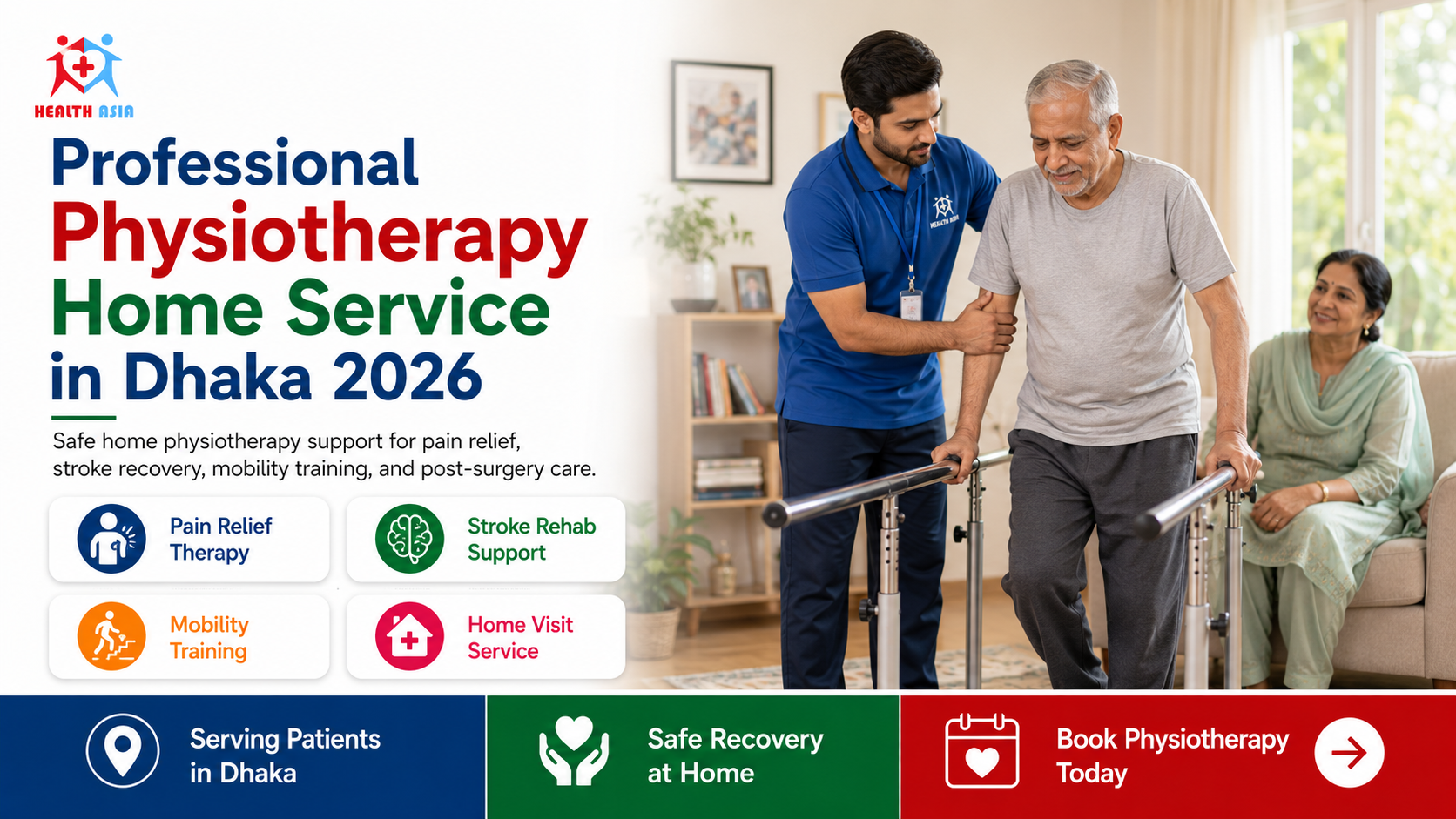
Home physiotherapy near me means a physiotherapist visits the patient at home instead of asking the patient to travel to a clinic or hospital.
This is helpful for patients who cannot move easily, feel pain while traveling, need family support, or live in busy areas where traffic makes clinic visits difficult.
Local coverage matters because physiotherapy is not usually a one-time service. Many patients need repeated sessions. If the therapist is too far away, scheduling becomes harder.
A nearby home visit physiotherapist can make regular care easier. It also reduces delays, travel stress, and missed sessions.
In Dhaka, people often search for home physiotherapy near me in areas like Banani, Dhanmondi, Gulshan, Uttara, Mirpur, Mohammadpur, Bashundhara, Badda, and nearby neighborhoods.
For premium home care areas like Banani, Dhanmondi, and Gulshan, patients often want reliable scheduling, trained therapists, clear communication, and safe home-based rehab.
Dhaka traffic can affect appointment timing. If a patient needs regular therapy, a nearby therapist or well-organized home care provider can make the plan smoother.
This is one reason local intent keywords like physiotherapy at home near me and home visit physiotherapist dhaka are important.
Stroke recovery usually needs consistent rehabilitation. The goal is to improve movement, balance, strength, coordination, walking, and independence.
A stroke patient may need more frequent sessions at the beginning, then a maintenance schedule as progress improves.
In early recovery, the patient may need frequent physiotherapy because the body is relearning movement. Sessions may focus on sitting balance, standing, walking support, hand movement, leg control, posture, and safe transfer from bed to chair.
The family should not wait too long to start rehab after the doctor says the patient is stable. Early guided movement can support better functional recovery.
Long-term stroke recovery may continue for months. The frequency can reduce when the patient becomes more independent, but exercises should continue.
For example, a patient who can walk with support may need sessions focused on balance, step training, strength, and daily function. A patient with hand weakness may need upper limb exercises and task practice.
A bedridden stroke patient may need regular physiotherapy to reduce stiffness, maintain joint movement, support circulation, prevent pressure-related problems, and improve basic mobility.
Family training is very important here. The therapist may teach safe positioning, turning, passive movement, and transfer techniques.
Injury recovery depends on the type of injury. A simple muscle strain is different from a fracture, ligament injury, surgery, or long-term joint problem.
For mild pain or stiffness, a few sessions may be enough to teach exercises, correct movement habits, and reduce pain. The patient must follow the home exercise plan between sessions.
After fracture or surgery, physiotherapy should follow the doctor’s advice. The therapist may help restore range of motion, strength, walking ability, and confidence.
In these cases, frequency may be higher in the early stage and then reduce as the patient improves.
Sports injury, knee pain, shoulder pain, and back pain often need progressive rehab. The therapist may start with pain control and gentle movement, then add strengthening, balance, and return-to-activity exercises.
If pain keeps returning, the therapist may check posture, muscle imbalance, and movement technique.
There is no single schedule for everyone. The right plan depends on the patient.
Older patients may need slower progression and more supervision. Younger patients may recover faster, but they still need correct exercise guidance.
High pain may limit movement. The therapist may begin with gentle exercises and pain-relief techniques. As pain improves, the plan becomes more active.
A patient who cannot sit, stand, or walk safely may need more regular support than someone with mild stiffness.
If the patient recently had a stroke, surgery, fracture, or serious injury, the doctor’s recommendation should guide the physiotherapy plan.
Family support can reduce the need for daily therapist visits if caregivers help the patient follow exercises safely. However, family members should only assist after proper therapist instruction.
A home physiotherapy session should be structured. It should not be random massage or generic exercise.
The physiotherapist checks pain, movement, strength, balance, walking ability, posture, joint stiffness, and daily activity problems.
The therapist may guide stretching, strengthening, balance work, walking practice, bed mobility, transfer training, or posture correction.
Depending on the condition, the therapist may use safe manual techniques, movement correction, heat or cold advice, or gentle mobility work.
The therapist may teach family members how to help the patient move safely. This is important for stroke, elderly care, and injury recovery.
Home physiotherapy is helpful, but some patients may also need clinic-based rehab.
Home therapy may be enough when the patient needs basic movement training, stroke rehab support, elderly mobility care, post-surgery home recovery, pain management, or regular guided exercises.
A clinic may be better if the patient needs advanced equipment, multiple therapy disciplines, complex testing, or specialist rehabilitation setup.
In some cases, the best plan combines home therapy and clinic-based review.
The best plan should be based on recovery goals, not only convenience.
Before deciding frequency, book an assessment. The therapist should check the patient’s condition and explain how many sessions may be needed.
Physiotherapy works better when the patient practices between sessions. Without home practice, recovery may be slower.
Track walking ability, pain level, balance, stiffness, sleep comfort, and daily function. Weekly progress tracking helps adjust the plan.
If you are searching for home physiotherapy near me, do not choose only by location. Choose a service that understands stroke recovery, injury rehab, elderly mobility, and safe home-based therapy.
Health Asia can support families in Dhaka with home physiotherapy planning, trained therapist coordination, and recovery-focused home sessions.
For stroke, injury, surgery, or long-term mobility problems, the right frequency can make recovery safer and more consistent.
It depends on the condition. Stroke, paralysis, and post-surgery recovery may need more frequent sessions. Mild pain or stiffness may need fewer sessions with home exercises.
Some stroke patients may need daily movement practice, but not all need daily therapist visits. The therapist can guide the right schedule after assessment.
Once a week may work for mild pain or maintenance. For stroke, injury, or walking difficulty, more frequent sessions may be needed.
Physiotherapy should start after the doctor says the patient is medically stable. Early rehab planning is usually important for better functional recovery.
Yes, home physiotherapy can support injury recovery by improving movement, reducing stiffness, building strength, and guiding safe activity.
Search for a provider that offers trained physiotherapists, local coverage, clear scheduling, and condition-based rehab planning.
Home physiotherapy is better for patients who cannot travel easily. Clinics may be better when advanced equipment or multidisciplinary rehab is needed.
Common demand areas include Banani, Dhanmondi, Gulshan, Uttara, Mirpur, Bashundhara, Badda, Mohammadpur, and nearby residential zones.
A session may include assessment, exercise, mobility training, pain support, walking practice, balance work, and family guidance.
You can contact Health Asia and share the patient’s condition, location, age, diagnosis, and recovery goal to choose the right home physiotherapy plan.
Fill out the form below and our Care Advisors will get back to you with care information you need.