Table of Contents
ToggleWhen a loved one struggles to breathe, securing a reliable oxygen cylinder becomes an immediate medical priority. Consequently, managing respiratory distress at home terrifies many families in Bangladesh. Suddenly, you must navigate complex medical equipment. Furthermore, you must ensure a continuous, safe supply of breathable air. Therefore, understanding how these devices work is essential for patient safety. Specifically, this guide breaks down everything you need to know about home respiratory support. Ultimately, we will help you operate this equipment safely and confidently.
A home-use cylinder is a high-pressure metal tank storing pure medical-grade oxygen. Manufacturers compress this life-saving gas into sturdy steel or aluminum containers. Consequently, these tanks allow patients to receive hospital-level respiratory therapy directly inside their own bedrooms.
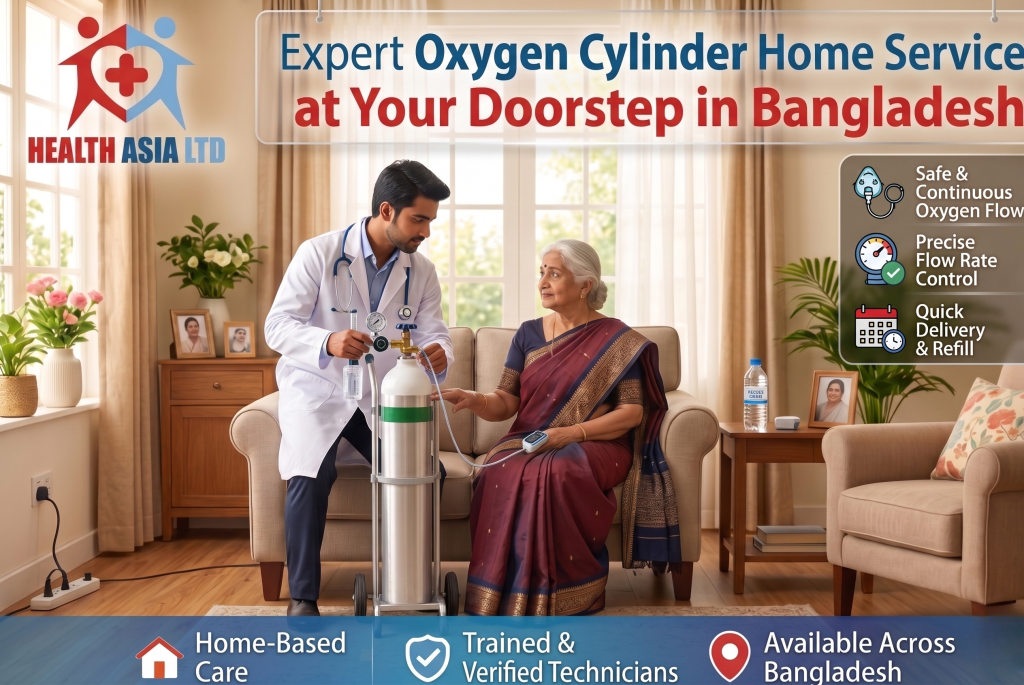
The system relies on a specialized medical regulator. First, you attach this regulator to the top of the tank. Next, the regulator reduces the extreme internal pressure of the gas. Then, it delivers a steady, controlled flow of oxygen to the patient. Furthermore, the oxygen travels through a humidifier bottle to add moisture. Finally, it reaches the patient through a disposable nasal cannula or face mask.
Doctors do not prescribe respiratory support lightly. Specifically, patients require this intervention when their lungs cannot extract enough oxygen from regular room air.
Patients living with severe respiratory diseases heavily rely on these devices. For example, Chronic Obstructive Pulmonary Disease (COPD) severely limits lung capacity. Additionally, late-stage heart failure reduces blood oxygen circulation. Likewise, patients recovering from severe viral pneumonia or asthma attacks require immediate supplemental air. Furthermore, palliative care patients utilize these tanks to ensure absolute breathing comfort.
Physicians monitor specific physical warning signs. First, they check for a consistently low blood oxygen saturation (SpO2) level. Specifically, readings consistently dropping below 90% trigger concern. Furthermore, chronic shortness of breath during basic tasks indicates lung stress. Additionally, bluish lips or fingertips signal severe oxygen deprivation. Consequently, doctors immediately prescribe home therapy upon observing these symptoms.
Selecting the right equipment depends entirely on the patient’s mobility and prescribed flow rate. Therefore, understanding the differences prevents medical supply emergencies.
Manufacturers design portable tanks for maximum mobility. Specifically, these lightweight aluminum tanks usually hold smaller volumes of gas. Consequently, patients can easily carry them in specialized backpacks. Furthermore, families utilize these smaller tanks to safely transport patients to hospital appointments.
Standard tanks provide long-term, continuous support. Specifically, these heavy steel tanks hold massive volumes of compressed gas. Therefore, they last significantly longer during high-flow therapies. However, they remain stationary inside the bedroom. Consequently, families must use wheeled trolleys to move them safely between rooms.
Cylinders store a finite amount of compressed gas. Therefore, you must refill them regularly. Conversely, oxygen concentrators run on electricity. Specifically, they actively pull in room air, filter out nitrogen, and deliver pure oxygen continuously. Consequently, concentrators never run out of gas. However, families must always keep a backup cylinder nearby in case of sudden power outages.
Handling pressurized gas requires strict adherence to safety protocols. Therefore, families must learn exactly how to operate the equipment without causing accidents.
First, secure the heavy tank on a stable, wheeled trolley. Second, firmly attach the medical regulator to the main valve using a wrench. Next, fill the attached humidifier bottle with distilled water up to the marked line. Then, connect the nasal cannula tubing to the humidifier outlet. Finally, slowly open the main tank valve and adjust the flow meter to the doctor’s prescribed rate.
Oxygen aggressively feeds fires. Therefore, you must eliminate all fire hazards near the patient. Specifically, strictly forbid smoking inside the house. Furthermore, keep the tank at least ten feet away from open kitchen stoves or lit candles. Additionally, never use oil-based lotions or petroleum jelly on the patient’s face, as these can ignite in an oxygen-rich environment.
Always store tanks perfectly upright. Consequently, laying them flat increases the risk of valve damage. Furthermore, secure them to a wall or trolley so they cannot tip over. Additionally, store backup tanks in a well-ventilated room away from direct, intense sunlight. Ultimately, never try to lift a heavy tank by pulling its delicate top valve.
Elderly patients often struggle to manage heavy medical equipment alone. Therefore, integrating respiratory support with professional senior care is crucial. Specifically, trained caregivers monitor the tank’s pressure gauge daily. Furthermore, they adjust the nasal prongs to prevent painful skin irritation. Most importantly, registered home nurses actively monitor the senior’s SpO2 levels. Consequently, they instantly recognize when a patient needs a higher flow rate and immediately alert the consulting physician.
Securing a reliable supply chain prevents terrifying late-night emergencies. Therefore, families must partner with established, medically verified suppliers. Specifically, reputable agencies coordinate rapid delivery directly to your doorstep. Furthermore, they provide the necessary trolleys, regulators, and masks. Additionally, professional delivery teams handle the heavy lifting. They safely set up the equipment in the patient’s room and train the family on basic operation.
Ensure your loved one never runs out of breath—contact Health Asia Ltd today for reliable oxygen cylinder rental, delivery, and professional home setup.
A home cylinder provides supplemental medical-grade oxygen to patients whose lungs cannot absorb enough oxygen from regular room air.
The duration depends entirely on the size of the tank and the doctor’s prescribed flow rate (measured in Liters Per Minute). Higher flow rates empty the tank much faster.
No. You must only set the flow rate exactly as prescribed by your consulting doctor. Consequently, delivering too much or too little oxygen causes severe medical complications.
Yes. Regular room air contains only 21% oxygen. Conversely, medical cylinders contain 99.5% pure, heavily filtered medical-grade oxygen.
The attached medical regulator features a clear pressure gauge. When the needle drops into the red warning zone, you must immediately order a refill.
No. Cylinders rely entirely on internal gas pressure. Therefore, they are the perfect emergency backup during severe power outages.
Immediately close the main valve tightly. Next, open the windows to ventilate the room. Finally, contact your medical supplier immediately for a safe equipment replacement.
Yes. Doctors frequently prescribe nighttime oxygen therapy. Specifically, patients use long, flexible tubing to sleep comfortably without dislodging the nasal prongs.
Yes. Reputable medical suppliers require a valid doctor’s prescription. This ensures they provide the correct equipment and match the exact respiratory needs of the patient.
Yes. However, you must secure the portable tank perfectly upright behind a seat. Furthermore, you must keep a window slightly open to ensure proper vehicle ventilation.
Fill out the form below and our Care Advisors will get back to you with care information you need.